Lorem ipsum dolor sit amet, consectetur adipisicing elit. Nostrum minus ea suscipit porro alias corporis libero at. Perferendis omnis, veniam nemo beatae vel? Tempora numquam a repellat eaque natus, magnam?
Heading 2
Lorem ipsum dolor sit amet, consectetur adipisicing elit. Autem ipsum mollitia neque, illum illo excepturi, eum incidunt fugit nostrum est, voluptate eaque minima corporis debitis at, dolores ipsam. Quaerat, dolores.
Heading 2
Lorem ipsum dolor sit amet, consectetur adipisicing elit. Autem ipsum mollitia neque, illum illo excepturi, eum incidunt fugit nostrum est, voluptate eaque minima corporis debitis at, dolores ipsam. Quaerat, dolores.
Heading 2
Lorem ipsum dolor sit amet, consectetur adipisicing elit. Autem ipsum mollitia neque, illum illo excepturi, eum incidunt fugit nostrum est, voluptate eaque minima corporis debitis at, dolores ipsam. Quaerat, dolores.
Heading 2
Lorem ipsum dolor sit amet, consectetur adipisicing elit. Autem ipsum mollitia neque, illum illo excepturi, eum incidunt fugit nostrum est, voluptate eaque minima corporis debitis at, dolores ipsam. Quaerat, dolores.
Reprinted from the Sacramento Bee
Although far more California voters say they are better off financially than they were a year ago, most remain pessimistic about the state’s broader economy, according to a new Field Poll.
The disconnect between attitudes about personal finances and larger economic conditions runs counter to conventional wisdom, said Field Poll Director Mark DiCamillo.
“Usually they go together,” DiCamillo said, noting that the dot-com bubble’s burst more than a dozen years ago triggered economic pessimism among Californians that deepened with the Great Recession of 2008. More Californians have been negative than positive about the state’s economy for 13 years in a row.
“We’re digging out from a very deep hole,” DiCamillo said.
Nearly half of registered voters, 48 percent, said they were “better off” financially than they were a year ago, and 27 percent said they were “worse off.” The remaining 25 percent said they experienced no change.
But when asked about the current state of the California economy, 50 percent said these are “bad times” for the state. A third of respondents said the state is in “good times,” and the remaining 17 percent were “in between” or “not sure.”
Members of families with annual household incomes of at least $100,000 tended to be the most optimistic; those with family incomes of $40,000 or less tended to the most pessimistic.
Andrea Torain, a laboratory supervisor for 13 years with the University of California, Davis, said she thinks her family is a little better off than a year ago but that these are bad times for Californians on the whole. “We know a lot of people who have lost jobs and homes,” she said, “I’m talking about family and friends.”
Although unemployment is down, Torain said, she thinks many of the new jobs created pay relatively little. “The jobs being added aren’t jobs you raise a family on,” she said.
A mother of six, Torain said that she sees rising child care costs draining working families’ incomes. Employees are paying more for health insurance, too, she said, while the benefits are getting cheaper.
“The government says the economy is doing better,” Torain said, “but if you ask the people on the street, they’d say it’s not.”
Lorem ipsum dolor sit amet, consectetur adipisicing elit. Nostrum minus ea suscipit porro alias corporis libero at. Perferendis omnis, veniam nemo beatae vel? Tempora numquam a repellat eaque natus, magnam?
Heading 2
Lorem ipsum dolor sit amet, consectetur adipisicing elit. Autem ipsum mollitia neque, illum illo excepturi, eum incidunt fugit nostrum est, voluptate eaque minima corporis debitis at, dolores ipsam. Quaerat, dolores.
Heading 2
Lorem ipsum dolor sit amet, consectetur adipisicing elit. Autem ipsum mollitia neque, illum illo excepturi, eum incidunt fugit nostrum est, voluptate eaque minima corporis debitis at, dolores ipsam. Quaerat, dolores.
Heading 2
Lorem ipsum dolor sit amet, consectetur adipisicing elit. Autem ipsum mollitia neque, illum illo excepturi, eum incidunt fugit nostrum est, voluptate eaque minima corporis debitis at, dolores ipsam. Quaerat, dolores.
Heading 2
Lorem ipsum dolor sit amet, consectetur adipisicing elit. Autem ipsum mollitia neque, illum illo excepturi, eum incidunt fugit nostrum est, voluptate eaque minima corporis debitis at, dolores ipsam. Quaerat, dolores.
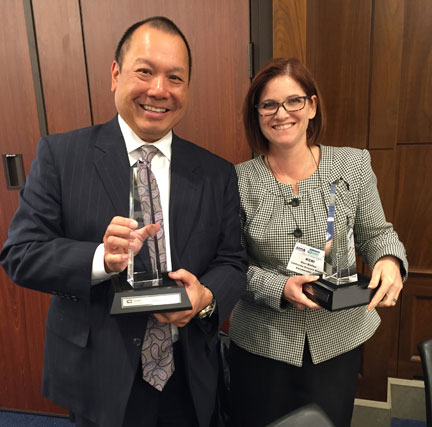
CGA President and CEO Ronald Fong, and Keri Askew Bailey, CGA senior vice president, Government Relations and Public Policy, were awarded the Food Marketing Institute’s Donald H. MacManus Award, the highest recognition for a state affairs executive,during FMI’s annual lobby day in Washington, DC, for their public affairs excellence. This is the first time two individuals from the same association have been honored in the same year.
CGA President/CEO Ron Fong and Keri Askew Bailey, senior vice president of Government Relations and Public Policy receive Donald MacManus Award.
“There is no one more worthy of this prestigious award than Ron Fong,” said CGA Chairman of the Board Joe Falvey, Unified Grocers, Inc. “His leadership and vision has brought CGA to the forefront of grocery associations. Keri Askew Bailey is also to be commended for leading CGA’s government relations team and implementing the association’s advocacy program. CGA congratulates both on a well-deserved award.”
Fong is a political strategist and his legislative alliances with state and national trade associations helped in defeating statewide legislation on GMO-labeling requirements and assisted in the passage of the first statewide bag usage law in 2014. He also led the association in its merger with the California Independent Grocers Association (CIGA), which united 179 independent grocers and suppliers with CGA’s existing membership. In his role as CEO, Fong oversees the association’s strategic direction and staff, which manages departments in government relations, communications, member services and business conferences.
“Ron Fong and Keri Askew Bailey exemplify the power of grassroots through their tireless efforts advocating on behalf of California retailers grocers on a multitude of state issues,” said FMI President Leslie Sarasin, “especially those issues related to the defeat of Proposition 37; fighting local sugarysugar-sweetened beverages drink warning labels and taxes; and passing a state-wide plastic bag bill with local preemption.”
Askew Bailey has worked on significant policy issues including Proposition 65; the Green Chemistry Initiative; attempts to curb deployment of assisted self-checkout technology in the state; and proposed state and local GMO- and sugar-sweetened beverage labeling. She has also worked to increase CGA’s visibility at the state Capitol and in local City Council and Board of Supervisors chambers across the stateand local government levels.
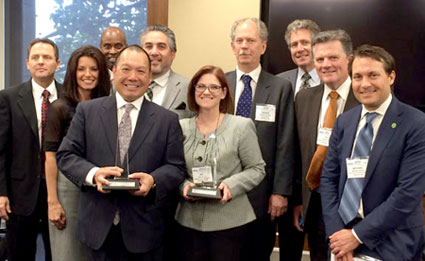
Left to right Richie Morgan, Shanna Morgan, North State Grocery; Jonathan Mayes, Albertsons/Safeway; Ron Fong, CGA; Bob Gutierrez, Food 4 Less (Stockton); Dennis Darling, Foods Etc.; Kevin Davis, Bristol Farms; Joe Falvey, Unified Grocers, Inc; and Mike Amiri, Nutricion Fundamental, Inc.
“Keri & Ron work tirelessly to advocate for California’s food retailers, suppliers and employees at the state, federal and local levels,” said CGA Government Relations Committee Chair Mary Kasper, Fresh & Easy. “CGA is deeply appreciative of their extraordinary vision and leadership.”
Lorem ipsum dolor sit amet, consectetur adipisicing elit. Nostrum minus ea suscipit porro alias corporis libero at. Perferendis omnis, veniam nemo beatae vel? Tempora numquam a repellat eaque natus, magnam?
Heading 2
Lorem ipsum dolor sit amet, consectetur adipisicing elit. Autem ipsum mollitia neque, illum illo excepturi, eum incidunt fugit nostrum est, voluptate eaque minima corporis debitis at, dolores ipsam. Quaerat, dolores.
Heading 2
Lorem ipsum dolor sit amet, consectetur adipisicing elit. Autem ipsum mollitia neque, illum illo excepturi, eum incidunt fugit nostrum est, voluptate eaque minima corporis debitis at, dolores ipsam. Quaerat, dolores.
Heading 2
Lorem ipsum dolor sit amet, consectetur adipisicing elit. Autem ipsum mollitia neque, illum illo excepturi, eum incidunt fugit nostrum est, voluptate eaque minima corporis debitis at, dolores ipsam. Quaerat, dolores.
Heading 2
Lorem ipsum dolor sit amet, consectetur adipisicing elit. Autem ipsum mollitia neque, illum illo excepturi, eum incidunt fugit nostrum est, voluptate eaque minima corporis debitis at, dolores ipsam. Quaerat, dolores.
Grocery retailers and suppliers from throughout California gathered in Sacramento on Wednesday, April 8, to discuss key industry issues with state legislators and staff during CGA’s Annual Grocers Day at the Capitol.
More than 60 grocers and suppliers participated in this one-day annual event that included face-to-face meetings with legislators in the State Capitol. Prior to their Capitol visits, attendees heard from freshman Assemblymember David Hadley (R-Torrance) and political insider Paul Mitchell.
“Grocers Day is our industry’s opportunity to talk face to face with state elected officials and discuss the key legislation being considered,” said CGA President/CEO Ron Fong. “This year was particularly important due to the challenging legislation now before both houses.”
To maximize their legislative visits, attendees were separated into smaller groups and pre-assigned legislators with stores in their district. CGA staff supplied each attendee with talking points and leave behind material on three key pieces of legislation, including:
AB 359 (Gonzalez) – Grocery Worker Retention
AB 305 (Gonzalez) Workers’ Compensation Apportionments
AB 357 (Chiu) Employee Scheduling
Following Grocers Day, attendees and legislators were invited to CGA’s annual President’s Reception at the Association’s headquarters, which provided a more causal atmosphere to further discuss industry topics.
Lorem ipsum dolor sit amet, consectetur adipisicing elit. Nostrum minus ea suscipit porro alias corporis libero at. Perferendis omnis, veniam nemo beatae vel? Tempora numquam a repellat eaque natus, magnam?
Heading 2
Lorem ipsum dolor sit amet, consectetur adipisicing elit. Autem ipsum mollitia neque, illum illo excepturi, eum incidunt fugit nostrum est, voluptate eaque minima corporis debitis at, dolores ipsam. Quaerat, dolores.
Heading 2
Lorem ipsum dolor sit amet, consectetur adipisicing elit. Autem ipsum mollitia neque, illum illo excepturi, eum incidunt fugit nostrum est, voluptate eaque minima corporis debitis at, dolores ipsam. Quaerat, dolores.
Heading 2
Lorem ipsum dolor sit amet, consectetur adipisicing elit. Autem ipsum mollitia neque, illum illo excepturi, eum incidunt fugit nostrum est, voluptate eaque minima corporis debitis at, dolores ipsam. Quaerat, dolores.
Heading 2
Lorem ipsum dolor sit amet, consectetur adipisicing elit. Autem ipsum mollitia neque, illum illo excepturi, eum incidunt fugit nostrum est, voluptate eaque minima corporis debitis at, dolores ipsam. Quaerat, dolores.
California Department of Food and Agriculture Secretary Karen Ross addressed the CGA Board of Directors on Thursday, April 10, on the impact of California’s ongoing drought.
Secretary Ross said the state is going to have to make “some very hard decisions in this very serious time.”
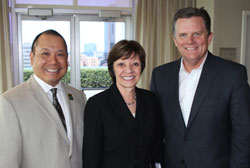
Ron Fong, CGA President; Secretary Karen Ross; CGA Chair Joe Falvey, Unified Grocers, Inc.
She said California should look to countries like Australia to better understand the impact of long-term droughts, including the critical importance of water conservation. She said Australians, who have endured an ongoing drought for nearly two decades, would be shocked by California’s lack of sustained water conservation, saying “drought fatigue” coupled with some rain this past month has created a false sense of water security with many Californian’s abandoning their water conservation efforts. The latest monthly statewide water conservation numbers were at their lowest levels since the drought began.
In developing solutions to California’s drought and ever-growing water challenges, entities involved in water management and usage will need to better understand how it is used and the multiple benefits of every water molecule.
She told the Board there needs to be more cooperative agreements between groups with different water priorities, singling out the adversarial relationship between farmers and environmentalists. She called on California’s rich history of cooperation to help fuel the innovation needed to prepare and reduce the impact of future droughts.
Secretary Ross recognized the importance of the grocery industry, saying it is “a critical part of our food chain.” She said her department wants to partner with the grocery industry. She thanked grocery retailers involved in the state’s California Grown program and encouraged all retailers to participate.
Lorem ipsum dolor sit amet, consectetur adipisicing elit. Nostrum minus ea suscipit porro alias corporis libero at. Perferendis omnis, veniam nemo beatae vel? Tempora numquam a repellat eaque natus, magnam?
Heading 2
Lorem ipsum dolor sit amet, consectetur adipisicing elit. Autem ipsum mollitia neque, illum illo excepturi, eum incidunt fugit nostrum est, voluptate eaque minima corporis debitis at, dolores ipsam. Quaerat, dolores.
Heading 2
Lorem ipsum dolor sit amet, consectetur adipisicing elit. Autem ipsum mollitia neque, illum illo excepturi, eum incidunt fugit nostrum est, voluptate eaque minima corporis debitis at, dolores ipsam. Quaerat, dolores.
Heading 2
Lorem ipsum dolor sit amet, consectetur adipisicing elit. Autem ipsum mollitia neque, illum illo excepturi, eum incidunt fugit nostrum est, voluptate eaque minima corporis debitis at, dolores ipsam. Quaerat, dolores.
Heading 2
Lorem ipsum dolor sit amet, consectetur adipisicing elit. Autem ipsum mollitia neque, illum illo excepturi, eum incidunt fugit nostrum est, voluptate eaque minima corporis debitis at, dolores ipsam. Quaerat, dolores.
EIGHTY-EIGHT percent of scientists polled by the Pew Research Center in January said genetically modified food is generally safe to eat. Only 37 percent of the public shared that view. The movement to require genetically modified food products to be labeled both reflects and exploits this divergence between informed opinion and popular anxiety.
Mandated labeling would deter the purchase of genetically modified (GM) food when the evidence calls for no such caution. Congress is right to be moving toward a more sensible policy that allows companies to label products as free of GM ingredients but preempts states from requiring such labels.
Lawmakers and voters in some states have considered requiring GM labeling, but only a few have chosen to label, and none have yet started. That’s good: The GM-food debate is a classic example of activists overstating risk based on fear of what might be unknown and on a distrust of corporations. People have been inducing genetic mutations in crops all sorts of other ways for a long time — by, for example, bathing plants in chemicals or exposing them to radiation. There is also all sorts of genetic turbulence in traditional selective plant breeding and constant natural genetic variation.
Yet products that result from selective gene splicing — which get scrutinized before coming to market — are being singled out as high threats. If they were threatening, one would expect experts to have identified unique harms to human health in the past two decades of GM-crop consumption. They haven’t. Unsurprisingly, institutions such as the National Academy of Sciences and the World Health Organization have concluded that GM food is no riskier than other food.
Promoters of compulsory GM food labeling claim that consumers nevertheless deserve transparency about what they’re eating. But given the facts, mandatory labeling would be extremely misleading to consumers — who, the Pew polling shows, exaggerate the worries about “Frankenfood” — implying a strong government safety concern where one does not exist. Instead of demanding that food companies add an unnecessary label, people who distrust the assurances that GM food is safe can buy food voluntarily labeled as organic or non-GM.
This isn’t just a matter of saving consumers from a little unnecessary expense or anxiety. If GM food becomes an economic nonstarter for growers and food companies, the world’s poorest will pay the highest price. GM crops that flourish in challenging environments without the aid of expensive pesticides or equipment can play an important role in alleviating hunger and food stress in the developing world — if researchers in developed countries are allowed to continue advancing the field.
A House bill introduced last week would facilitate a voluntary labeling system and prevent states and localities from going any further to indulge the GM labeling crowd. It would also empower the Food and Drug Administration to require labels on GM products that materially differ from their non-GM cousins in ways that can affect human health. Yes, food industry interests back the bill. That doesn’t make it wrong.
Lorem ipsum dolor sit amet, consectetur adipisicing elit. Nostrum minus ea suscipit porro alias corporis libero at. Perferendis omnis, veniam nemo beatae vel? Tempora numquam a repellat eaque natus, magnam?
Heading 2
Lorem ipsum dolor sit amet, consectetur adipisicing elit. Autem ipsum mollitia neque, illum illo excepturi, eum incidunt fugit nostrum est, voluptate eaque minima corporis debitis at, dolores ipsam. Quaerat, dolores.
Heading 2
Lorem ipsum dolor sit amet, consectetur adipisicing elit. Autem ipsum mollitia neque, illum illo excepturi, eum incidunt fugit nostrum est, voluptate eaque minima corporis debitis at, dolores ipsam. Quaerat, dolores.
Heading 2
Lorem ipsum dolor sit amet, consectetur adipisicing elit. Autem ipsum mollitia neque, illum illo excepturi, eum incidunt fugit nostrum est, voluptate eaque minima corporis debitis at, dolores ipsam. Quaerat, dolores.
Heading 2
Lorem ipsum dolor sit amet, consectetur adipisicing elit. Autem ipsum mollitia neque, illum illo excepturi, eum incidunt fugit nostrum est, voluptate eaque minima corporis debitis at, dolores ipsam. Quaerat, dolores.
Sacramento shoppers will ditch plastic bags starting next year, joining more than a third of Californians who live in places where such bags have been banned.
In a unanimous vote, the Sacramento City Council approved a ban on single-use plastic bags that will effectively eliminate plastic bags from the checkout counters of all grocery stores, pharmacies and convenience stores within city limits.
In lieu of plastic, customers will be given the option of recycled paper bags or reusable bags that stores will be required to sell for at least 10 cents apiece.
At Tuesday night’s council meeting, audience members held signs displaying their support for the ban.
“Ban the bag,” some of the signs said. “Protect our rivers,” said others.
Only two speakers Tuesday voiced opposition to the bag ban.
“This is about our city resuming our spot as a leader in the state of California and doing the right thing,” Mayor Kevin Johnson said before voting for the measure.
His vote follows months of statements indicating Johnson would push for an ordinance to limit plastic bags in Sacramento if opponents of a similar state law signed last year by Gov. Jerry Brown prevailed in getting that ban suspended or overturned. A referendum challenging the statewide plastic bag ban qualified for the November 2016 ballot and effectively put the measure on hold until after the vote.
But no matter what happens statewide, Sacramento’s new ban will take effect Jan. 1.
The ordinance is aimed at grocery stores, pharmacies and convenience stores, where single-use plastic bags will no longer be available at checkout. The stores will be allowed to provide promotions for free reusable bags, though the law limits such promotions to no more than 60 days per year.
Brian O’Hara of Californians Against Waste, an organization that supports a statewide ban, said this was to reinforce the notion that reusable bags should be reused and not turned into de facto single-use sacks.
Stores also will be required to provide free reusable bags or recycled paper bags to consumers in the California Special Supplemental Nutrition Program for Women, Infants and Children (WIC).
According to a report compiled by city staff, nearly 14 million plastic bags are given out in Sacramento every month. California retailers distribute about 19 billion bags per year, or 522 per person, according to Californians Against Waste. But less than 5 percent of those bags are recycled.
Those that are recycled can still prove problematic, the city staff reported. Although bags are accepted as part of the city’s curbside recycling program, they often clog the sorting machinery, forcing staff workers to shut down the process about six times per day to remove tangled bags, the report states.
Several council members who voted to support the plastic bag ordinance did so out of concern for the environmental and financial toll taken on the city, they said.
The two people who spoke in opposition to the ban Tuesday focused largely on the cost of recycled paper or reusable bags.
Lee Califf, executive director of the American Progressive Bag Alliance, which represents the plastic bag industry, has said “the proposed ordinance in Sacramento wouldn’t have a meaningful impact on the environment” and said it would “threaten California jobs and take money out of the wallets of hardworking Sacramento citizens – with every cent of the paper bag fees going straight to big grocers, rather than to serve a public purpose.”
More than one-third of Californians live in places where single-use plastic bags are outlawed. As of Tuesday, 138 jurisdictions have banned the bags, according to Californians Against Waste, including several in the Sacramento area such as Davis, Nevada City, Chico, Truckee and South Lake Tahoe.
If the state’s ban is reinstated after the November 2016 vote, it would supersede the Sacramento ordinance. But should the state measure fail, Sacramento’s ban would remain intact.
There are slight differences between the ban approved by the city and the state’s ban: The state ban allows stores to also offer a compostable bag option in lieu of plastic bags; and the city ordinance requires stores to keep three years of sales records for paper and reusable bags, while the state law has no such provision.
Lorem ipsum dolor sit amet, consectetur adipisicing elit. Nostrum minus ea suscipit porro alias corporis libero at. Perferendis omnis, veniam nemo beatae vel? Tempora numquam a repellat eaque natus, magnam?
Heading 2
Lorem ipsum dolor sit amet, consectetur adipisicing elit. Autem ipsum mollitia neque, illum illo excepturi, eum incidunt fugit nostrum est, voluptate eaque minima corporis debitis at, dolores ipsam. Quaerat, dolores.
Heading 2
Lorem ipsum dolor sit amet, consectetur adipisicing elit. Autem ipsum mollitia neque, illum illo excepturi, eum incidunt fugit nostrum est, voluptate eaque minima corporis debitis at, dolores ipsam. Quaerat, dolores.
Heading 2
Lorem ipsum dolor sit amet, consectetur adipisicing elit. Autem ipsum mollitia neque, illum illo excepturi, eum incidunt fugit nostrum est, voluptate eaque minima corporis debitis at, dolores ipsam. Quaerat, dolores.
Heading 2
Lorem ipsum dolor sit amet, consectetur adipisicing elit. Autem ipsum mollitia neque, illum illo excepturi, eum incidunt fugit nostrum est, voluptate eaque minima corporis debitis at, dolores ipsam. Quaerat, dolores.
Event Photographs Below
More than 700 friends, family and industry peers celebrated the induction of three grocery industry executives into the California Grocers Association Educational Foundation Hall of Achievement on March 26, 2015 in Sacramento, CA.
Jim and Joyce Raley Teel
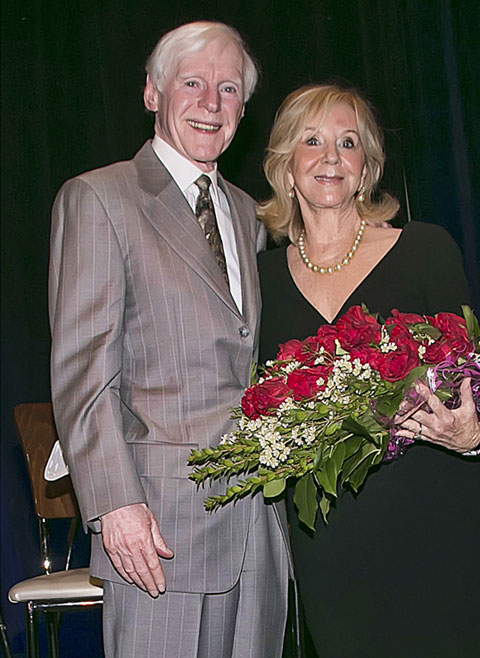
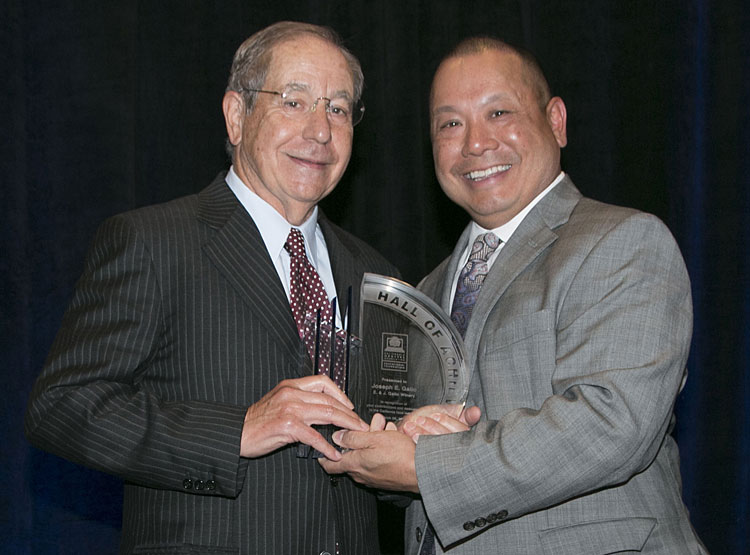
Jim and Joyce Raley Teel, Raley’s Family of Fine Stores, and Joseph E. Gallo, E. & J. Gallo Winery, join a prestigious group of Hall of Achievement recipients who have been recognized for their many contributions to not only the grocery industry, but the communities they serve.
“This year’s inductees are true icons of our industry. It is with great pleasure that we recognize Jim, Joyce, and Joe, for their lifelong commitment to the grocery industry,” said CGAEF President Ron Fong. “Their stories personify hundreds of similar families, including my own, who experienced the American dream of creating successful businesses through hard work, dedicated service and reliance on the strength of family.”
Led by this year’s event chairs Mike Teel, Raley’s Family of Fine Stores, and Gary Ippolito, E. & J. Gallo Winery, the event raised more than $500,000 – funds that support the Foundation’s college scholarship and tuition reimbursement programs.
“It is very gratifying to celebrate the spirit of family business by honoring two California families with deep roots in the Golden State’s grocery industry,” Fong said.
The evening featured an inspiring speech by Raley’s employee Albert Enemuoh, a CGAEF scholarship recipient. After his presentation, guests bid on live auction items and participated in a Fund-A-Need supporting CGAEF’s college scholarship and tuition reimbursement programs.
Joe Gallo with CGA President Ron Fong
The CGA Educational Foundation was created under the direction of the California Grocers Association Board of Directors in 1992. Its mission is to provide financial assistance to advance the educational goals of CGA member company employees and their dependents and offer educational programs to advance the grocery industry. For more information regarding CGAEF programs and for a complete listing of past Hall of Achievement honorees, visit www.cgaef.org.
About our honorees:
James E. Teel, Co-chair Emeritus, Board of Directors Joyce Raley Teel, Owner and Co-chair Emeritus, Board of Directors
James E. Teel celebrates 65 years of service with Raley’s in 2014. Jim began working for Thomas P. Raley as a bottle sorter while attending McClatchy High School in Sacramento. He continued to work for Raley’s while he earned his bachelor’s degree in Business Administration from Sacramento State College in 1952.
Jim learned the grocery business from the ground up – loading, unloading and driving delivery trucks, as well as working as a Grocery Clerk and Produce Clerk. After college graduation, he worked as an Apprentice Butcher at store level for two years. He was then promoted to Meat Buyer and began working at Raley’s corporate office. While there, he helped set up the company’s central control operation for merchandising and buying, and became the company’s first Personnel Director in 1958. Over the years, Jim became a trusted adviser to owner, Tom Raley, serving as Vice President of Operations and later Chairman of the Board. He now serves as Co-chair Emeritus with his wife, Joyce, whom he married in 1950. He served on the board of the Northern California Grocers Association for 15 years and is a former president of that organization.
Joyce Raley Teel, daughter of Raley’s founder Thomas P. Raley, is the owner of the company and serves as Co-chair Emeritus with her husband. Joyce grew up working in her father’s stores and officially joined the company in 1985. A strong believer in supporting her community, Joyce co-founded Raley’s Food For Families program, providing food assistance in partnership with food banks. This effort has since raised $31 million and 21 million pounds of food in the communities served by Raley’s stores.
Joyce started the Thomas P. Raley Foundation for family philanthropic endeavors in 1995. In 1998, she established the Joyce Raley Teel Scholarship to assist employees and their family members in their educational pursuits. Joyce also strongly supports the local arts community.
Jim and Joyce have five children. Their son, Mike Teel, serves as President and CEO of Raley’s. Two of their daughters (Laurie Struck and Lisa Davidson) and two sons-in-law sit on Raley’s Board of Directors.
Raley’s Family of Fine Stores operates 128 stores in California and Nevada. The company includes Bel Air Markets, Nob Hill Foods and Food Source stores.
Joseph Gallo, E. & J. Gallo Winery
Joseph E. Gallo, is President and Chief Executive Officer of the E. & J. Gallo Winery, the world’s largest family-owned winery. The company has a significant presence in the California wine, brandy and distilled spirits industries with eight wineries and more than 60 brands including table and sparkling wines, dessert wines and distilled spirits.
As President and CEO, Mr. Gallo has focused much of his energy on growing the company and has overseen a number of acquisitions including Barefoot, Louis M. Martini, Mirassou Vineyards, William Hill Estate, Columbia Winery and, most recently, Edna Valley Vineyards. He has also directed the expansion of the company’s import portfolio with entries from nine different countries as well as the introduction of New Amsterdam Gin, New Amsterdam Vodka and Familia Camarena Tequila.
Mr. Gallo joined the winery’s sales department in 1965, and was instrumental in the company gaining national distribution by 1970, applying lessons learned from working alongside his father, Ernest Gallo, and his uncle, Julio Gallo. Prior to becoming CEO in 2001, he focused most of his efforts on the company’s expansion into international markets, overseeing sales, distribution, marketing and operations. Today, Gallo International has various regional headquarters around the world. In the United States, Mr. Gallo has served on the Board of Directors for the Wine Institute of California since 1972, and the Grocery Manufacturers Association since 2001. Mr. Gallo has served on the Stanford University Graduate School of Business Advisory Council. Stanford University recognized Mr. Gallo with the Stanford Associates Achievement Award.
Born in Modesto, California, March 12, 1941, to Ernest and Amelia Gallo, Mr. Gallo spent his youth working in the family business. He graduated from the University of Notre Dame in 1962, and earned his M.B.A. from the Stanford Business School in 1964. He and his wife, Ofelia, are the parents of three children, Stephanie, Ernest and Joseph and have six grandchildren.
Mr. Gallo and the Gallo family are committed to helping grow wine consumption throughout the world and contributing to the long-term success of the global wine industry. The Gallo family considers family ownership its greatest asset and believes that the benefits of private ownership enable long-term business sustainability through investment back into physical assets, brand building, vineyard research and continued long-term relationships with winery employees, growers, distributors, retailers and customers.
Lorem ipsum dolor sit amet, consectetur adipisicing elit. Nostrum minus ea suscipit porro alias corporis libero at. Perferendis omnis, veniam nemo beatae vel? Tempora numquam a repellat eaque natus, magnam?
Heading 2
Lorem ipsum dolor sit amet, consectetur adipisicing elit. Autem ipsum mollitia neque, illum illo excepturi, eum incidunt fugit nostrum est, voluptate eaque minima corporis debitis at, dolores ipsam. Quaerat, dolores.
Heading 2
Lorem ipsum dolor sit amet, consectetur adipisicing elit. Autem ipsum mollitia neque, illum illo excepturi, eum incidunt fugit nostrum est, voluptate eaque minima corporis debitis at, dolores ipsam. Quaerat, dolores.
Heading 2
Lorem ipsum dolor sit amet, consectetur adipisicing elit. Autem ipsum mollitia neque, illum illo excepturi, eum incidunt fugit nostrum est, voluptate eaque minima corporis debitis at, dolores ipsam. Quaerat, dolores.
Heading 2
Lorem ipsum dolor sit amet, consectetur adipisicing elit. Autem ipsum mollitia neque, illum illo excepturi, eum incidunt fugit nostrum est, voluptate eaque minima corporis debitis at, dolores ipsam. Quaerat, dolores.
CGA member Northgate Gonzalez Market was one of four winners of the Food Marketing Institute’s 2014 Community Outreach Awards. The awards recognize the creative, charitable programs established and carried out by food retailers to enhance the lives of those in the communities they serve.
“In an industry experiencing tumultuous change, the generous spirit and community-focused attitude of food retailers remains a constant,” said David Fikes, FMI’s vice president of communications and consumer affairs. “Our 2014 awardees, and all nominees, demonstrated great creativity and dedication in finding new ways of fulfilling the food retailer call to feed families and enrich the lives of those they serve.”
Winners were selected across four categories: programs addressing food insecurity, youth development, neighborhood health improvement programs and community engagement. FMI added a community engagement category in 2014 in order to recognize the retailer who best engaged their online social community and received the most fan support for their program on Facebook. FMI’s judging criteria included participation, community need and impact.
Each winner will receive $1,000 from FMI to further their program:
Neighborhood Health Improvement Programs: Northgate Gonzalez Market Viva la Salud
Northgate Gonzalez Market created “Viva La Salud Program a Community Partner” to provide affordable, quality health products and services, including in-store mammograms and health screenings.
Programs Addressing Food insecurity: Food Lion Feeds
Food Lion launched “Food Lion Feeds” with a commitment to donate 500 million meals to families in need by the end of 2020. In 2014, over 40 million meals were donated.
Youth Development Programs: Hy-Vee/Sanford Legends
Since 2005, the Legends Grants Program has helped local nonprofit sports organizations build facilities, purchase equipment and improve their programs. The program has raised $1,298,000 to date.
Community Engagement: Russ’s Market Russ’s Community Rewards
This program allows customers to use points earned through in-store shopping to support local organizations. 2,700 households have used their community points to redeem over 11,000 offers for community organizations.
Lorem ipsum dolor sit amet, consectetur adipisicing elit. Nostrum minus ea suscipit porro alias corporis libero at. Perferendis omnis, veniam nemo beatae vel? Tempora numquam a repellat eaque natus, magnam?
Heading 2
Lorem ipsum dolor sit amet, consectetur adipisicing elit. Autem ipsum mollitia neque, illum illo excepturi, eum incidunt fugit nostrum est, voluptate eaque minima corporis debitis at, dolores ipsam. Quaerat, dolores.
Heading 2
Lorem ipsum dolor sit amet, consectetur adipisicing elit. Autem ipsum mollitia neque, illum illo excepturi, eum incidunt fugit nostrum est, voluptate eaque minima corporis debitis at, dolores ipsam. Quaerat, dolores.
Heading 2
Lorem ipsum dolor sit amet, consectetur adipisicing elit. Autem ipsum mollitia neque, illum illo excepturi, eum incidunt fugit nostrum est, voluptate eaque minima corporis debitis at, dolores ipsam. Quaerat, dolores.
Heading 2
Lorem ipsum dolor sit amet, consectetur adipisicing elit. Autem ipsum mollitia neque, illum illo excepturi, eum incidunt fugit nostrum est, voluptate eaque minima corporis debitis at, dolores ipsam. Quaerat, dolores.
Sacramento Bee Editorial
A new academic study out this week, and published in the journal PLOS ONE, for the first time gives a hard number to the amount of plastic garbage littering our oceans. It’s a sobering figure: 5.25 trillion particles of plastic.
That’s a number so large as to be incomprehensible. So, picture it this way: 269,000 tons of water bottles, Lego pieces, disposable pens and lighters, take-out coffee lids, Barbie heads, detergent containers and, of course, lots of plastic bags floating atop the sparkling blue horizon.
That’s a helpful image for people to recall should they run across one of the petitions being circulated by the plastic bag industry trying to stop California’s ban on single-use plastic bags.
A group of plastic bag makers, most of them outside of the state, are spending millions on misleading ads and paid signature gatherers to get a referendum on the bag ban on the November 2016 ballot.
If the referendum qualifies for the ballot, it will postpone the July 15 bag ban implementation date until after the 2016 election. We don’t think the ban would be overturned by voters, who, according to polls, are mostly supportive. The plastic bag industry probably doesn’t either, but qualifying a referendum will give them more than a year reprieve.
It’s impossible to say how many more plastic shopping bags will be added to the Pacific Ocean during that time, but it’s a fair bet that a good portion of the 14 billion plastic grocery bags used in the state each year will end up in storm drains that flow into the ocean.
Though the bags can be recycled in California, hardly any are. Some are used a second time, especially by dog owners, but most end up in landfills where they will sit for generations before breaking down. Many of those, however, will escape their confines, catching the wind in their unique parachute design until they end up strewn about the state’s wild places – clogging up rivers flowing through the Valley, wrapping around Joshua trees in the desert and tying up manzanita bushes in the mountains.
There are ways for Californians to derail the plastic industry’s fight to keep profiting from polluting our state. The first, anyone can do: Don’t sign the petition.
The plastic bag industry is pulling every trick out of its, er, bag of them to win back waning public support of plastic bags: spurious claims that it’s no more than a crooked deal between politicians and the grocers, who can charge a fee for paper bags; baseless job-loss claims; and even absurd warnings that using reusable bags will spread disease.
The second way is for elected leaders in cities that have held off on enacting local bans to do so now.
It also would send a strong message from the capital to the main supporter of the bag ban referendum, South Carolina-based Hilex Poly, that Californians are done being complicit in the trashing of our precious natural resources.
We don’t expect a single-use plastic bag ban in California to stop the flow of plastic trash into the oceans altogether. Opponents of bag bans rightly point out that plastic bags are just one of the many sources of trash. But every difficult journey begins somewhere. Stopping the flow of one significant source of garbage is a great way to begin.
Read more here: http://www.sacbee.com/opinion/editorials/article4434099.html#storylink=cpy
Lorem ipsum dolor sit amet, consectetur adipisicing elit. Nostrum minus ea suscipit porro alias corporis libero at. Perferendis omnis, veniam nemo beatae vel? Tempora numquam a repellat eaque natus, magnam?
Heading 2
Lorem ipsum dolor sit amet, consectetur adipisicing elit. Autem ipsum mollitia neque, illum illo excepturi, eum incidunt fugit nostrum est, voluptate eaque minima corporis debitis at, dolores ipsam. Quaerat, dolores.
Heading 2
Lorem ipsum dolor sit amet, consectetur adipisicing elit. Autem ipsum mollitia neque, illum illo excepturi, eum incidunt fugit nostrum est, voluptate eaque minima corporis debitis at, dolores ipsam. Quaerat, dolores.
Heading 2
Lorem ipsum dolor sit amet, consectetur adipisicing elit. Autem ipsum mollitia neque, illum illo excepturi, eum incidunt fugit nostrum est, voluptate eaque minima corporis debitis at, dolores ipsam. Quaerat, dolores.
Heading 2
Lorem ipsum dolor sit amet, consectetur adipisicing elit. Autem ipsum mollitia neque, illum illo excepturi, eum incidunt fugit nostrum est, voluptate eaque minima corporis debitis at, dolores ipsam. Quaerat, dolores.
Reprinted from The Los Angeles Times (12/1/2014)
Stung by losses in the November election, the California Legislature’s Democratic majority arrives for the first day of a new session Monday facing a political terrain more hostile to tax increases and other priorities of liberal lawmakers.
The Democrats’ failure to win a supermajority in either the Senate or Assembly, after capturing both just two years ago, is expected to produce a more centrist agenda and give more clout to moderate Democrats and Republicans.
The political shift probably dooms the long-proposed revision to Proposition 13, the 1978 initiative that capped property tax hikes, said Larry Gerston, a political science professor at San Jose State.
“The Democrats had their chance with the bulletproof, absolute two-thirds majorities last year, but they were unwilling to pull the trigger,” Gerston said. “That window is now shut.”
Assemblyman Henry T. Perea (D-Fresno), who leads the moderate Democrats, said the subtle shift to the middle will be felt when energy issues come to the forefront during the upcoming, two-year legislative session.
Last year, he led a high-profile but unsuccessful effort to delay the inclusion of transportation fuels in the state’s cap-and-trade program to limit carbon emissions. He said to expect more “robust debate” about the state’s efforts to address climate change in the coming session.
“Nearly half the [Democratic] caucus could be considered more moderate than in the past, but I do think that, for example, a moderate in Fresno is going to be very different from a moderate in the Bay Area,” Perea said.
State law requires the Legislature to meet for one day in early December to convene the new session, swear in newly elected members and elect the leadership. Members will get a 2% pay raise Monday and can begin introducing bills, but the Legislature adjourns at the end of the day until Jan. 5, when the session begins in earnest.
Both houses will see some new leadership. Sen. Kevin De León (D-Los Angeles) is the new president pro tem of the Senate, and Assemblywoman Kristin Olsen of Modesto becomes the new Republican leader in the Assembly.
Senate Democrats start the new session with 25 of the 40 seats in the Senate, when 27 are needed for a supermajority; Republicans have 14. The Democrats have a 52-28 majority in the Assembly.
There is one vacancy in the Senate, caused by the resignation of Democratic Sen. Roderick Wright over criminal charges, and a Democrat is expected to win the Dec. 9 special election.
“I expect there will be a more deliberate pace with respect to policy-making next year, largely because the makeup of the Senate has changed,” said Senate Republican Leader Bob Huff of Diamond Bar.
“The voters sent a message by electing Republicans in key swing districts, which eliminated the Democrats’ supermajority, and it forces them to continue working with us,” he said. “And they clearly do not want any tax increases.”
When Democrats held a supermajority in both chambers in 2012, they had enough votes to approve tax increases or place proposed constitutional amendments on the statewide ballot without a single Republican vote.
De León said Democrats would have to collaborate with Republicans on the state’s problems. “It’s about getting things done together,” he said.
Along with the changing political dynamics, the new Legislature will see a record number of African American and Asian American members, including the first Vietnamese American member of the state Senate.
Republicans have been touting the diverse backgrounds of their newly elected members. Three new GOP lawmakers come from Asian backgrounds: Sen.-elect Janet Nguyen (R-Santa Ana) was born in Vietnam; incoming Assembly members Ling-Ling Chang of Chino Hills and Young Kim of Fullerton were born in Taiwan and South Korea, respectively.
They help swell the membership of the California Asian & Pacific Islander Legislative Caucus from 11 to a record 12 members. That could stymie efforts to roll back the state’s ban on affirmative action in public colleges and universities. A proposal to do so was pushed by Latino and African American Democrats last year, but it stalled after heated pushback by some Asian American communities.
In addition, the California Legislative Black Caucus will have a record 11 members for the first time in its 47-year history and will probably increase to a record 12 if former Assemblyman Isadore Hall (D-Inglewood) wins the special election for Wright’s Senate seat, as expected.
The Legislative Latino Caucus and the Legislative Lesbian, Gay, Bisexual and Transgender Caucus will both see slight drops in memberships in the new session.
The departing LGBT members include former Speaker John A. Pérez (D-Los Angeles), the first openly gay speaker, and Assemblyman Tom Ammiano (D-San Francisco).
“We’ll feel their losses, there’s no question,” said Assemblyman Rich Gordon (D-Menlo Park), the caucus’ chairman.
Although their numbers are slightly diminished, Gordon was bullish on gay rights and other priority issues in the coming years, in part because they have increasingly been embraced by moderate lawmakers.
In both parties, he said, “you’re seeing folks — even if they’re labeled more moderate — understanding the equity issues.”
Another change in the new Legislature is the departure of lawmakers embroiled in scandal.
Wright was convicted of voting fraud and resigned in October. Democratic Sens. Leland Yee of San Francisco and Ronald Calderon of Montebello were indicted by federal grand juries on separate public corruption allegations. Both left office Nov. 30 as their terms expired.
Cookie Consent
We use cookies to improve your experience on our site. By using our site, you consent to cookies.
Used to monitor number of Google Analytics server requests
10 minutes
__utmb
Used to distinguish new sessions and visits. This cookie is set when the GA.js javascript library is loaded and there is no existing __utmb cookie. The cookie is updated every time data is sent to the Google Analytics server.
30 minutes after last activity
__utmc
Used only with old Urchin versions of Google Analytics and not with GA.js. Was used to distinguish between new sessions and visits at the end of a session.
End of session (browser)
__utmz
Contains information about the traffic source or campaign that directed user to the website. The cookie is set when the GA.js javascript is loaded and updated when data is sent to the Google Anaytics server
6 months after last activity
__utmv
Contains custom information set by the web developer via the _setCustomVar method in Google Analytics. This cookie is updated every time new data is sent to the Google Analytics server.
2 years after last activity
__utmx
Used to determine whether a user is included in an A / B or Multivariate test.
18 months
_ga
ID used to identify users
2 years
_gali
Used by Google Analytics to determine which links on a page are being clicked
30 seconds
_ga_
ID used to identify users
2 years
_gid
ID used to identify users for 24 hours after last activity
24 hours
_gat
Used to monitor number of Google Analytics server requests when using Google Tag Manager
1 minute
_gac_
Contains information related to marketing campaigns of the user. These are shared with Google AdWords / Google Ads when the Google Ads and Google Analytics accounts are linked together.