Consumers shell out more for eggs, prices soar in California

Heading 2

Lorem ipsum dolor sit amet, consectetur adipisicing elit. Nostrum minus ea suscipit porro alias corporis libero at. Perferendis omnis, veniam nemo beatae vel? Tempora numquam a repellat eaque natus, magnam?

Heading 2

Lorem ipsum dolor sit amet, consectetur adipisicing elit. Autem ipsum mollitia neque, illum illo excepturi, eum incidunt fugit nostrum est, voluptate eaque minima corporis debitis at, dolores ipsam. Quaerat, dolores.

Heading 2

Lorem ipsum dolor sit amet, consectetur adipisicing elit. Autem ipsum mollitia neque, illum illo excepturi, eum incidunt fugit nostrum est, voluptate eaque minima corporis debitis at, dolores ipsam. Quaerat, dolores.

Heading 2

Lorem ipsum dolor sit amet, consectetur adipisicing elit. Autem ipsum mollitia neque, illum illo excepturi, eum incidunt fugit nostrum est, voluptate eaque minima corporis debitis at, dolores ipsam. Quaerat, dolores.

Heading 2

Lorem ipsum dolor sit amet, consectetur adipisicing elit. Autem ipsum mollitia neque, illum illo excepturi, eum incidunt fugit nostrum est, voluptate eaque minima corporis debitis at, dolores ipsam. Quaerat, dolores.

By The Associated Press

SAN FRANCISCO – Consumers are shelling out more for a carton of large eggs as benchmark prices in California have gone up by 150 percent in a year.

Last August, a dozen large eggs cost $1.45 and a year later the price is $3.61 for the same carton, according to information from the U.S. Department of Agriculture.

The San Francisco Chronicle reported (http://bit.ly/1MIBYSS) Monday that one reason for the jump was an avian flu outbreak this spring that resulted in the killing of 48 million domestic chickens and turkeys, mostly in the Midwest.

In addition, California producers have to pay 20 cents more per dozen eggs for chicken feed because it’s mostly shipped from the Midwest, said Ken Klippen, president of the National Association of Egg Farmers.

The rollout of Proposition 2, which requires that all eggs sold in California come from farms that allow chickens to move around freely, has also caused prices to soar, the newspaper reported.

Under the measure, each egg-laying hen must have 116 square inches of space, rather than the standard 67 inches of space in battery cages, resulting in the upgrading of farms and fewer hens overall.

“The costs of having to build new structures and new facilities were incurred by the egg farmers, and those costs have to get passed along,” said John Segale, spokesman for the Association of California Egg Farmers.

California farmers produce roughly one-third to one-half of the eggs eaten in the state. Some larger farms in Iowa that raise hens according to Prop. 2 specifications for California have been shut down since the avian flu outbreak, said Klippen.

There is one bright spot for California’s egg industry: Farmers who produce pasture-raised eggs have seen an increase in business, now that their $9 eggs no longer seem so expensive.

California produced 18 percent fewer eggs between May 2014 and May 2015, according to USDA statistics.

“We Card” Program Hits 20th Milestone

Heading 2

Lorem ipsum dolor sit amet, consectetur adipisicing elit. Nostrum minus ea suscipit porro alias corporis libero at. Perferendis omnis, veniam nemo beatae vel? Tempora numquam a repellat eaque natus, magnam?

Heading 2

Lorem ipsum dolor sit amet, consectetur adipisicing elit. Autem ipsum mollitia neque, illum illo excepturi, eum incidunt fugit nostrum est, voluptate eaque minima corporis debitis at, dolores ipsam. Quaerat, dolores.

Heading 2

Lorem ipsum dolor sit amet, consectetur adipisicing elit. Autem ipsum mollitia neque, illum illo excepturi, eum incidunt fugit nostrum est, voluptate eaque minima corporis debitis at, dolores ipsam. Quaerat, dolores.

Heading 2

Lorem ipsum dolor sit amet, consectetur adipisicing elit. Autem ipsum mollitia neque, illum illo excepturi, eum incidunt fugit nostrum est, voluptate eaque minima corporis debitis at, dolores ipsam. Quaerat, dolores.

Heading 2

Lorem ipsum dolor sit amet, consectetur adipisicing elit. Autem ipsum mollitia neque, illum illo excepturi, eum incidunt fugit nostrum est, voluptate eaque minima corporis debitis at, dolores ipsam. Quaerat, dolores.

WeCard_AwarenessMonth2015logoTwenty years ago the national “We Card” program was launched to help combat youth access to tobacco. Back in 1995, those underage could more easily buy tobacco at retail stores with some reports indicating a 40-60 percent success rate.

Today, after years of efforts to prevent underage tobacco sales, it’s down to roughly 10 percent according to the federal government’s published 2013 Synar Report measuring illegal tobacco sales to minors. In California, the retail violation rate was 8.7 percent.

Celebrating its 20th anniversary this year, the We Card Program’s September-held, We Card Awareness Month, seeks to boost responsible retailing awareness along with the availability of 2016 We Card materials.

From Labor Day to New Year’s Eve, retailers prepare for the coming year by ordering We Card in-store materials and lining up their employees for We Card’s online training courses.

To keep up with the times, We Card has launched several new items in its 20th year, including:

  • A new smartphone site – We Card NOW – www.wecardnow.com — providing retail management and employees with quick access to its resources, including an Age Calculator and digital version of its 365-page a day calendar that store cashiers use to “card” customers.
  • New resources to help merchants of e-vapor products identify and deny minors’ attempts to purchase, such as:
    • New “Under 18, No E-Vapor: WE CARD” in-store signage.
    • A new in-store E-Vapor kit of resources that is especially suited for “vape” stores who are new to the concept of handling age-restricted product sales.
    • An “E-Cig and Vapor Central” dedicated home on wecard.org where resources can be quickly found, ordered and used.
WE Card Promotional Smartphone Material

“We Card was a pioneering program in 1995 to help introduce the concept of responsible retailing on a massive scale and “carding” was a sometimes used term. Today, carding is commonplace and We Card is forging new resources for all age-restricted products, including those designed to prevent e-vapor product sales to minors,” said Lyle Beckwith, Senior Vice President of Government Relations for the National Association of Convenience Stores, and a We Card board member.

Preventing e-vapor sales to minors is especially important since over the past few years nearly all states have quickly adjusted their state laws to include e-cigarettes and vaping products within their tobacco or age-restricted product sales laws. At the federal level, the FDA has proposed “deeming” e-vapor products under its authority, and “carding” and denying sales to minors will be added as another retailer requirement.

“The landscape of age-restricted product sales is changing,” said Doug Anderson, President of We Card, “however, the fundamentals of handling those underage attempts remain largely the same – identify the underage purchase attempt and deny it.”

FDA has completed more than 461,000 retailer compliance checks since 2010 — at a rate of approximately 100,000 in recent years. FDA has issued official guidance for Tobacco Retailer Training Programs and We Card’s elearning training not only matches this federal curriculum but exceeds it with retail-focused emphasis on customer service, role-playing and interactive gaming – earning the training an American Business Awards 2013 Bronze Stevie® Award as a Best Training Site.

The California Grocers Association encourages all retailers to continue in their efforts to successfully identify and prevent age-restricted product sales to minors.

To visit the We Card website, click here.


About We Card: The We Card Program, Inc. is a national non-profit organization that represents a unified effort among trade associations, retailers, wholesalers and manufacturers. It was created 20 years ago to support retailers of tobacco and other age-restricted products. Individual retail establishments as well as large retail chains use We Card’s educational and training services to comply with federal and state laws while working to prevent underage tobacco, e-vapor and other age-restricted product sales. National and state retail trade associations, government officials, community groups and others also support We Card’s ongoing efforts to educate and train retailers.

CGA Purchases Future Headquarters

Heading 2

Lorem ipsum dolor sit amet, consectetur adipisicing elit. Nostrum minus ea suscipit porro alias corporis libero at. Perferendis omnis, veniam nemo beatae vel? Tempora numquam a repellat eaque natus, magnam?

Heading 2

Lorem ipsum dolor sit amet, consectetur adipisicing elit. Autem ipsum mollitia neque, illum illo excepturi, eum incidunt fugit nostrum est, voluptate eaque minima corporis debitis at, dolores ipsam. Quaerat, dolores.

Heading 2

Lorem ipsum dolor sit amet, consectetur adipisicing elit. Autem ipsum mollitia neque, illum illo excepturi, eum incidunt fugit nostrum est, voluptate eaque minima corporis debitis at, dolores ipsam. Quaerat, dolores.

Heading 2

Lorem ipsum dolor sit amet, consectetur adipisicing elit. Autem ipsum mollitia neque, illum illo excepturi, eum incidunt fugit nostrum est, voluptate eaque minima corporis debitis at, dolores ipsam. Quaerat, dolores.

Heading 2

Lorem ipsum dolor sit amet, consectetur adipisicing elit. Autem ipsum mollitia neque, illum illo excepturi, eum incidunt fugit nostrum est, voluptate eaque minima corporis debitis at, dolores ipsam. Quaerat, dolores.

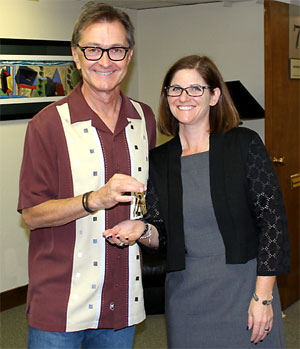
CGA Senior Vice President Keri Askew-Bailey receives the keys to the building from previous owner Butch Corum.

SACRAMENTO, CA – The California Grocers Association announced today that it has completed the purchase of an office building located at 1005 12th Street in downtown Sacramento, Calif. The Association will manage the building under the name Aisle 3 Concepts, LLC.

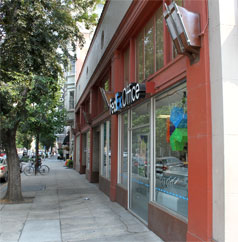
The 20,544 square foot three-level structure, built in 1925, is anchored by a FedEx Office Print & Ship Center on the corner of J and 12th Street. Additional retail spaces, including a Wells Fargo ATM, occupy the ground level.

Aisle 3 Concepts will renovate the second floor and move CGA’s offices in 2018 after its lease at 1215 K Street in Sacramento expires. The lower floor will be renovated for potential tenant space.

“As CGA expands its member programs it became apparent the Association needed more space. For some time CGA has wanted to purchase a building that could allow for that expansion.” said CGA President/CEO Ron Fong.

“This purchase represents a sound investment for the Association. Its location is perfect for our government relations activities,“ he added.

IMG_7614_websiteCGA Chair Joe Falvey, Unified Grocers, Inc., said the building purchase will stabilize rent and save the Association a significant amount of money in the coming years.

“This building purchase will be CGA’s legacy for the future,” Falvey said. “Our members will own their own building and be a part of the revitalization of Sacramento’s downtown business district.”

Editorial: Grocery Bill is Veiled Attempt to Boast Union Organizing and Should be Vetoed

Heading 2

Lorem ipsum dolor sit amet, consectetur adipisicing elit. Nostrum minus ea suscipit porro alias corporis libero at. Perferendis omnis, veniam nemo beatae vel? Tempora numquam a repellat eaque natus, magnam?

Heading 2

Lorem ipsum dolor sit amet, consectetur adipisicing elit. Autem ipsum mollitia neque, illum illo excepturi, eum incidunt fugit nostrum est, voluptate eaque minima corporis debitis at, dolores ipsam. Quaerat, dolores.

Heading 2

Lorem ipsum dolor sit amet, consectetur adipisicing elit. Autem ipsum mollitia neque, illum illo excepturi, eum incidunt fugit nostrum est, voluptate eaque minima corporis debitis at, dolores ipsam. Quaerat, dolores.

Heading 2

Lorem ipsum dolor sit amet, consectetur adipisicing elit. Autem ipsum mollitia neque, illum illo excepturi, eum incidunt fugit nostrum est, voluptate eaque minima corporis debitis at, dolores ipsam. Quaerat, dolores.

Heading 2

Lorem ipsum dolor sit amet, consectetur adipisicing elit. Autem ipsum mollitia neque, illum illo excepturi, eum incidunt fugit nostrum est, voluptate eaque minima corporis debitis at, dolores ipsam. Quaerat, dolores.

Reprinted from The Sacramento Bee (July 21, 2015)

What once was old is new again. This old adage rings true, especially with regards to California public policy. Assembly Bill (AB) 359 authored by Assemblywoman Lorena Gonzalez (D-San Diego), which is on Gov. Jerry Brown’s desk awaiting signature or veto, is just that. It is simply a retread of a long line of failed attempts to force new burdensome regulations on California businesses.

Specifically, AB 359 would impose mandatory worker retention standards upon change of ownership for traditional grocery stores over 15,000 square feet.  This measure may make for a catchy sound bite or fall in line with a campaign platform—but AB 359 is an unnecessary proposal riddled with unintended consequences that will limit food access, lead to job loss and hurt family-owned companies.

AB 359 is at the top of the California Chamber of Commerce “Job Killers” list, and rightfully so. Prior attempts to establish the unprecedented policy of taking away a private employer’s right to choose their own workforce have either been rejected by the Legislature or has been vetoed by the sitting Governor.

AB 359 won’t create stability, and instead will cause blight when failing grocery stores are forced to close their doors rather than sell to a company whose format and business model better reflect the needs of the community they serve.

If the demographics in a neighborhood change, the original store format may no longer be suited for that community. Generally speaking, grocery store owners look for a buyer whose business model meets the needs of the changing community. AB 359 will stall transactions or, worse, scare off potential buyers who would be subject to a host of new regulations including burdensome record keeping requirements, different workforce standards and greater potential for frivolous litigation. All the while big-box retailers, chain pharmacies and others would not be subject to the same set of standards.

The average size of a traditional supermarket, regardless of ownership, is about 45,000 square feet according to the Food Marketing Institute. With razor thin profit margins, often 1 to 2 percent, sales volume is essential to success in the traditional grocery industry. To yield a profitable volume a store must have tens of thousands of products. Setting aside a few uniquely positioned business models, traditional grocers must operate at a larger footprint in order to offer the variety of products customers are seeking; this includes many independent and family owned companies. AB 359’s arbitrary footprint threshold of 15,000 square feet reflects a lack of experience and knowledge of the grocery industry.

The author has failed to produce any substantial evidence that warrants this targeted attack on the industry.  In fact, on the contrary, the grocery industry saw one of the largest and most successful California-based mergers earlier this year between two major grocery chains. The merger resulted in 83 store locations sold in Southern California, purchased by a single buyer, who voluntarily retained store employees. The buyer even honored the collective bargaining agreements already in place.

AB 359 creates an unlevel playing field for small family-owned businesses by exempting out some of the largest retailers in the country and the author never produced examples of Californians being put out of work explicitly due to grocery companies merging.

The answer is clear – AB 359 is nothing more than a Trojan horse designed to assist labor groups in their organizing efforts.

If a new employer is forced to retain a 50 percent plus one unionized workforce for 90 days, a federal statute known as the “Successor Employer Doctrine” is triggered. This means that the existing workforce is automatically recognized as the bargaining unit – without a vote by the employees.

One of the chief responsibilities of the legislature is to pass responsible, economically viable policies aimed at balancing the needs of its citizens, not green-lighting policies that will make it easier for big labor to organize.  AB 359 is bad public policy and is a solution in search of a problem that simply has not been identified. We urge Governor Brown to veto this bad legislation.

Ronald K. Fong
President  & CEO, California Grocers Association

Rex S. Hime
President  & CEO, California Business Properties Association

Onerous Grocery Worker Retention Bill Heads to Governor

Heading 2

Lorem ipsum dolor sit amet, consectetur adipisicing elit. Nostrum minus ea suscipit porro alias corporis libero at. Perferendis omnis, veniam nemo beatae vel? Tempora numquam a repellat eaque natus, magnam?

Heading 2

Lorem ipsum dolor sit amet, consectetur adipisicing elit. Autem ipsum mollitia neque, illum illo excepturi, eum incidunt fugit nostrum est, voluptate eaque minima corporis debitis at, dolores ipsam. Quaerat, dolores.

Heading 2

Lorem ipsum dolor sit amet, consectetur adipisicing elit. Autem ipsum mollitia neque, illum illo excepturi, eum incidunt fugit nostrum est, voluptate eaque minima corporis debitis at, dolores ipsam. Quaerat, dolores.

Heading 2

Lorem ipsum dolor sit amet, consectetur adipisicing elit. Autem ipsum mollitia neque, illum illo excepturi, eum incidunt fugit nostrum est, voluptate eaque minima corporis debitis at, dolores ipsam. Quaerat, dolores.

Heading 2

Lorem ipsum dolor sit amet, consectetur adipisicing elit. Autem ipsum mollitia neque, illum illo excepturi, eum incidunt fugit nostrum est, voluptate eaque minima corporis debitis at, dolores ipsam. Quaerat, dolores.

The California State Senate on July 13, passed AB 359 (D-Gonzalez), a measure that would impose onerous worker retention requirements on traditional supermarkets, on a 22-14 vote. The bill now heads to the Governor’s desk where he will have just 12 days to sign or veto the legislation.

While the vote came down largely along party lines, Big Labor was unable to secure support from four Democrats including Senators Cathleen Galgiani (D-Stockton) and Steve Glazer (D-Orinda) who voted no along with Senators Robert Hertzberg (D-Van Nuys) and Lois Wolk (D-Davis) who did not vote. Republican Senator Jeff Stone (R-Riverside County) spoke in opposition to the bill.

Mirroring ordinances in five localities, including Los Angeles and San Francisco, the bill seeks to require successor owners to retain eligible employees for at least 90 days under terms different than other company employees. Inexplicably, the bill exempts some of the largest competitors in the grocery space including superstores, chain pharmacies, and dollar discount stores.

CGA argued that the measure would create an unlevel playing field for California’s traditional supermarket sector as those companies would face additional barriers to store development and in sales transactions. In addition, we outlined concerns with significant avenues for litigation against companies. The California Chamber of Commerce has placed the bill on its annual “Job Killer” list.


CGA Statement Regarding California Senate Passing AB 359

We are extremely disappointed in the Senate’s action today in passing Assembly Bill 359. California Communities need more grocery options, not fewer. For the Legislature to approve a measure that unfairly singles out traditional grocery stores will only exacerbate food access and blight challenges in our State. Even the author acknowledges there is no identified problem and that this measure targets companies she herself stated have been, “…for the most part responsible employers in our state for a very long time.”

This bill will do little more than provide disincentives to grocery expansion and provide a competitive advantage to a select few – ironically those that do not generally provide the quality food options and middle-class jobs found in traditional markets. We applaud those members of the Senate—Democrats and Republicans alike who stood up for local communities and the grocers that support them. We look to Governor Brown to veto this poorly drafted attack on California’s grocery industry.

Ron Fong
President/CEO
California Grocers Association

Cool Weather Greets Foundation Golfers

Heading 2

Lorem ipsum dolor sit amet, consectetur adipisicing elit. Nostrum minus ea suscipit porro alias corporis libero at. Perferendis omnis, veniam nemo beatae vel? Tempora numquam a repellat eaque natus, magnam?

Heading 2

Lorem ipsum dolor sit amet, consectetur adipisicing elit. Autem ipsum mollitia neque, illum illo excepturi, eum incidunt fugit nostrum est, voluptate eaque minima corporis debitis at, dolores ipsam. Quaerat, dolores.

Heading 2

Lorem ipsum dolor sit amet, consectetur adipisicing elit. Autem ipsum mollitia neque, illum illo excepturi, eum incidunt fugit nostrum est, voluptate eaque minima corporis debitis at, dolores ipsam. Quaerat, dolores.

Heading 2

Lorem ipsum dolor sit amet, consectetur adipisicing elit. Autem ipsum mollitia neque, illum illo excepturi, eum incidunt fugit nostrum est, voluptate eaque minima corporis debitis at, dolores ipsam. Quaerat, dolores.

Heading 2

Lorem ipsum dolor sit amet, consectetur adipisicing elit. Autem ipsum mollitia neque, illum illo excepturi, eum incidunt fugit nostrum est, voluptate eaque minima corporis debitis at, dolores ipsam. Quaerat, dolores.

Unusually cool weather made for perfect golf conditions at the 2015 CGA Educational Foundation Southern California Golf Classic at Pacific Palms Resort in Industry, Calif., on July 8.

This year’s event was nearly 20 degrees cooler than in 2014 – a statistic that did not go unnoticed by the full field of grocery retailers and suppliers playing in this year’s tournament.

“The weather couldn’t have been better,” said CGAEF President Ron Fong. “Perfect weather for a perfect event to help raise funds for the Foundation’s college scholarship and tuition reimbursement programs. Thank you to all those who played and to the many event sponsors.”

Dan Benart, Stater Bros. Markets

In addition to a great day of golf, attendees heard from Dan Benart, a grocery supervisor for Stater Bros. Markets, who shared how the Foundation’s programs helped his children reach their education dreams and how he now is utilizing the Foundation to further his professional career.

Dan was introduced by newly elected Foundation Board of Trustee Tom Seaton, Stater Bros. Markets.

The Foundation’s Northern California tournament is July 21, 2015 at Blackhawk Country Club in Danville, Calif.

Congratulations to this year’s winners!

First Place
Michael Robinson
Lee Deminski
Alex Corsaro
Scott Anderson

Second Place
John Bonicatto
Diana Godfrey
Michael Paul
Mike Mortensen

Third Place
Mike Casazza
Sheryl Salazar
Rick Cruz
Pat McDowell

Closest to the Pin
Women – Diane Davilla
Men – Bob Kenneoy

Longest Drive
Women – Elizabeth Cherry
Men – Mike Paul

[FAG id=3091]

CGA Member To Compete at World Reebok CrossFit Games

Heading 2

Lorem ipsum dolor sit amet, consectetur adipisicing elit. Nostrum minus ea suscipit porro alias corporis libero at. Perferendis omnis, veniam nemo beatae vel? Tempora numquam a repellat eaque natus, magnam?

Heading 2

Lorem ipsum dolor sit amet, consectetur adipisicing elit. Autem ipsum mollitia neque, illum illo excepturi, eum incidunt fugit nostrum est, voluptate eaque minima corporis debitis at, dolores ipsam. Quaerat, dolores.

Heading 2

Lorem ipsum dolor sit amet, consectetur adipisicing elit. Autem ipsum mollitia neque, illum illo excepturi, eum incidunt fugit nostrum est, voluptate eaque minima corporis debitis at, dolores ipsam. Quaerat, dolores.

Heading 2

Lorem ipsum dolor sit amet, consectetur adipisicing elit. Autem ipsum mollitia neque, illum illo excepturi, eum incidunt fugit nostrum est, voluptate eaque minima corporis debitis at, dolores ipsam. Quaerat, dolores.

Heading 2

Lorem ipsum dolor sit amet, consectetur adipisicing elit. Autem ipsum mollitia neque, illum illo excepturi, eum incidunt fugit nostrum est, voluptate eaque minima corporis debitis at, dolores ipsam. Quaerat, dolores.

Reprinted from Lodi News-Sentinel

Lodi Athlete Chris Podesto Will Take on the World at Reebok CrossFit Games

There are times when Chris Podesto doesn’t know how to quit.

The 50-year-old spends his lunch hour doing cardio work at In Shape City, then does intense workouts for another hour and a half after work at Lodi CrossFit Gym six days a week.

“I’m supposed to take one day off. Sometimes I go for a 10-mile run on that day. I’m not supposed to,” Podesto said. “I struggle with that. It’s not recommended for the sport. The body needs recovery. There are active recoveries — I swim and I jog slow.”

That relentless training has its rewards. Podesto is one of 20 men worldwide who have qualified for the Reebok CrossFit Games in the 50-54 division. The competition takes place from July 21 to 26 at StubHub Center in Carson, Calif., and Podesto is ranked 16th out of those 20.

Last August, Podesto made a conscious decision to shoot for the CrossFit Games, and began increasing the intensity of his workouts. He had a setback in December when he separated his right biceps training in the event he considers his nemesis — the ring muscle-ups, where an athlete jumps and grabs the rings, then swings the body up using the arms.
It’s the only major injury he’s had during CrossFit.

CGA Board Member Chris Podesto

“Here’s the tradeoff: I’m 50 years old, and I can do things I couldn’t do at 25,” he said. “Can you get hurt? Yeah, that possibility exists. You can get hurt walking across the street. But the benefits, it’s amazing.”

Podesto hasn’t always been this focused on fitness. He was a fullback for Tokay High, graduating in 1983, then went on to play fullback for the University of Pacific’s football team. His football career led to three knee repair surgeries.
After his playing career, he stayed more or less in shape.

“I had some chubby phases. I was bored at the gym,” he said. “I heard about CrossFit five years ago and I started doing it, and wasn’t really willing to refine my skills to get to the games. Athletically, I was always there but never got over the hurdle.

“I’m really excited. I never thought it was a big deal, but it’s gotten to be a big deal.”
Podesto works with a trainer from Canada, Mike Fitzgerald, who runs a gym and helps Podesto build his training program.

“He builds programs around people’s weaknesses,” Podesto said. “I wouldn’t have made it here without him, because I was always trying to freelance and do it on my own, but I realized that the guys at the top have specific training regimens with people that know more about the physiology of the body than I do.”

Podesto’s workout on Tuesday involved power cleans, front squats, ring muscle-ups, 10 rope climbs, wall walks, squat cleans, wall balls and box jumps.

Because the CrossFit Games entail a much more strenuous aerobic program than the regionals, Fitzgerald has Podesto losing a little weight to better approach the competition. He’s hovering around 200 pounds at the moment, about seven pounds lighter than usual.

Podesto said his career as an executive marketing director for Food4Less gives him the opportunity to maintain his eating habits.

“I’m eating much healthier than I ever have,” he said. “Mostly paleo — meat and produce, then I have oatmeal and rice with the meat and vegetable, limited fruit. It’s really changed.”

The CrossFit Games Masters event (ages 40 and older) includes competition in eight events, starting with four on July 22: the deadlift ladder, the max distance handstand, the sled sprint and the run rope, which involves a 400-meter run and two rope climbs.

Competition on July 23 starts with the 2007, which includes a 1,000-meter row, then five rounds of 20 pull-ups and seven push jerks. The day concludes with the medball burpee, which includes medicine-ball cleans over the shoulder and burpees.

The final day starts with the Down and Back Chipper, which combines seven activities into one event. The competition concludes with the Masters Final consisting of a 100-meter run, four muscle-ups and five snatches of 125 pounds.
The overall competition is scored based on how athletes place in each event.

Shopper Trends Cites New Approaches to Mealtime

Heading 2

Lorem ipsum dolor sit amet, consectetur adipisicing elit. Nostrum minus ea suscipit porro alias corporis libero at. Perferendis omnis, veniam nemo beatae vel? Tempora numquam a repellat eaque natus, magnam?

Heading 2

Lorem ipsum dolor sit amet, consectetur adipisicing elit. Autem ipsum mollitia neque, illum illo excepturi, eum incidunt fugit nostrum est, voluptate eaque minima corporis debitis at, dolores ipsam. Quaerat, dolores.

Heading 2

Lorem ipsum dolor sit amet, consectetur adipisicing elit. Autem ipsum mollitia neque, illum illo excepturi, eum incidunt fugit nostrum est, voluptate eaque minima corporis debitis at, dolores ipsam. Quaerat, dolores.

Heading 2

Lorem ipsum dolor sit amet, consectetur adipisicing elit. Autem ipsum mollitia neque, illum illo excepturi, eum incidunt fugit nostrum est, voluptate eaque minima corporis debitis at, dolores ipsam. Quaerat, dolores.

Heading 2

Lorem ipsum dolor sit amet, consectetur adipisicing elit. Autem ipsum mollitia neque, illum illo excepturi, eum incidunt fugit nostrum est, voluptate eaque minima corporis debitis at, dolores ipsam. Quaerat, dolores.

The Food Marketing Institute (FMI) on June 10, 2015, introduced its 41st annual U.S. Grocery Shopper Trends study, which focuses on a deep shift in shopping and mealtime distinctions, ultimately demonstrating new patterns regarding what and why we buy, who is on task and when we shop.

The executive summary outlines current trends influencing shoppers and shopping; several demographic influences that are coalescing to form a new shared shopper paradigm; facts and figures that argue for more shared meals as a family; and updates to shopper values, including a convergence of personal health and community wellness ideas.

FMI President and CEO Leslie G. Sarasin presented the study findings during a keynote address at FMI Connect, the food retail industry’s premier event.

Sarasin noted in her address, “More and more people are playing a larger role in grocery shopping. In fact, 57% of the population report that it does all or most of the grocery shopping; 26% says it shares in at least 50% of the grocery shopping, resulting in a whopping 83% of U.S. adults who participate in at least half the food shopping for their households.

“Now if that feels high, it might be due to continued battling perceptions within a household regarding that which constitutes a ‘primary shopper,’  with one person in the house defining it as the number of trips made to the market, and the other in the household defining it according to quantity of groceries purchased. Regardless of the metric used, grocery shopping has clearly moved into shared territory in the household division of labor.”

Regarding shopper considerations about health and wellness, consumers were asked to identify the groups they tend to view as being on their side, and those they tend to view as working against them. Family tops the support list with only 4% of consumers saying their family works against them and a significant 79% reported their family is on their side.

Of note, among members of the food chain helping them address health concerns, consumers ranked farmers highest – with 4% against them and 61% for them – followed by primary food store – with only 6% against them and 45% for them. Toward the bottom of the list, food manufacturers have a 41% “against” vs. a 13% “for” rating, and fast food restaurants are at the very bottom in terms of consumer sentiment – a 57% “working against me” and a 6% “working on my side” rating.

Sarasin emphasized that regardless of the shape, size or constitution of a family, there are benefits to the family meal and food retailers, as trusted partners in the family food strategy, have multiple opportunities to support families in their effort to share more meals together at home.

“I suggest that if we’re going to successfully help families achieve the goal of eating at least one more meal together than they are currently doing, we will need to literally put all meal possibilities on the table – including breakfast,” she noted. “This means helping them with easy structures so breakfast becomes a meal not to be skipped, eaten alone or eaten out, and it has real potential of being a time when all in the home are gathered around the table starting the day in a healthy and cohesive fashion.”

The research indicates that different stages of family development and the various roles people have within the family structure all offer different opportunities for retailers. For instance, despite stereotypes of harried parents, meal consistency actually peaks among households with children, primarily due to their higher rates of dinner consumption. Kids eat consistently and frequently, and when the kids eat, the parents eat, skipping meals relatively rarely.

Sarasin concluded, “As I observe the state of the world around us, I see a nation in need of guidance and in need of direction.  As trusted leaders in your companies, your communities and your families, you can be the star that gives us direction, the light that guides us and the force that helps heal us.”

Andronico’s Names New CEO

Heading 2

Lorem ipsum dolor sit amet, consectetur adipisicing elit. Nostrum minus ea suscipit porro alias corporis libero at. Perferendis omnis, veniam nemo beatae vel? Tempora numquam a repellat eaque natus, magnam?

Heading 2

Lorem ipsum dolor sit amet, consectetur adipisicing elit. Autem ipsum mollitia neque, illum illo excepturi, eum incidunt fugit nostrum est, voluptate eaque minima corporis debitis at, dolores ipsam. Quaerat, dolores.

Heading 2

Lorem ipsum dolor sit amet, consectetur adipisicing elit. Autem ipsum mollitia neque, illum illo excepturi, eum incidunt fugit nostrum est, voluptate eaque minima corporis debitis at, dolores ipsam. Quaerat, dolores.

Heading 2

Lorem ipsum dolor sit amet, consectetur adipisicing elit. Autem ipsum mollitia neque, illum illo excepturi, eum incidunt fugit nostrum est, voluptate eaque minima corporis debitis at, dolores ipsam. Quaerat, dolores.

Heading 2

Lorem ipsum dolor sit amet, consectetur adipisicing elit. Autem ipsum mollitia neque, illum illo excepturi, eum incidunt fugit nostrum est, voluptate eaque minima corporis debitis at, dolores ipsam. Quaerat, dolores.

SAN LEANDRO, Calif., June 2, 2015 (GLOBE NEWSWIRE) — Local grocery store chain and California Grocers Association member Andronico’s Community Markets (ACM), based in the East Bay with five stores throughout the Bay Area, has named one of the grocery industry’s leading innovators as CEO to head up the historic brand.

news_monford
Suzy Monford

Suzy Monford, CEO and Founder of Food Sport International, is recognized for her ability to innovate across key global growth markets including grocery, lifestyle retailing and health/fitness. She has been recruited internationally by leading corporations in Australia, United Kingdom, Canada, and the U.S.

Monford most recently held the role of Head of Innovation for Woolworth’s, the largest retailer in Asia Pacific, where she was recruited to lead strategic change and international joint ventures. Previously she founded Food Sport International, working with Coles Supermarkets in Australia as her primary client. Other clients include Cheers Inc., a restaurant corporation in Texas, where she worked as CEO/president. A certified health coach, Monford has served on the executive board of directors for both the San Antonio Mayor’s Fitness Council and the YMCA, and actively teaches fitness and health in her community.

“At Andronico’s, one of our core merchant principles is to build healthy communities while we build our business. We believe that you can do well, by doing good. To that end, I’ll be introducing a new innovative approach to health and wellness that is a major departure from the role that the supermarket industry has traditionally played. Fitness—in all aspects from kitchen to shopping to cooking to dining—will be the way ACM delivers on its promise to advocate for community and our own corporate health. We’ll pioneer recipes for fit living for our shoppers and teammates.”

Monford takes on the role at ACM as the company looks to continue its resurgence as an innovator in the San Francisco Bay Area specialty food retail.

“I’m honored to have the opportunity to continue the Andronico’s legacy,” said Monford. “We were born in Berkeley in 1929, and today we remain an original American market whose success has been built on dedication to quality, uniqueness, service and neighborhood. We were “local” before it was a thing. We were focused on small producers before artisanal became a tag line to rationalize high retails.”

Monford’s plans include innovating store formats with eventual store expansion and embracing and utilizing the latest technology available in the grocery industry to drive value, convenience and to energize the shopping experience.

“We may be a small company, but we’ll be brilliant with data and digital,” Monford added. “We’re going to marry traditional brick and mortar mercantile, with best of class tech in order to create a relevant shop for today.”

Monford plans to develop new products and concepts throughout the Andronico’s stores that will redefine value and serve each store’s diverse community. Chief among her priorities include an emphasis on speed and convenience, including bringing on new delivery App Instacart throughout the chain by mid-summer, and developing a new fitness and health-centric shopping portal for customers and teammates.

Andronico’s Community Markets, a privately owned grocery retailer offering a full range of specialty, organic and conventional groceries, began in Berkeley in 1929 and today has stores in Berkeley, San Francisco, San Anselmo and Los Altos.

CA WIC Announces New Vendor Agreements – Short Timeline for Document Return

Heading 2

Lorem ipsum dolor sit amet, consectetur adipisicing elit. Nostrum minus ea suscipit porro alias corporis libero at. Perferendis omnis, veniam nemo beatae vel? Tempora numquam a repellat eaque natus, magnam?

Heading 2

Lorem ipsum dolor sit amet, consectetur adipisicing elit. Autem ipsum mollitia neque, illum illo excepturi, eum incidunt fugit nostrum est, voluptate eaque minima corporis debitis at, dolores ipsam. Quaerat, dolores.

Heading 2

Lorem ipsum dolor sit amet, consectetur adipisicing elit. Autem ipsum mollitia neque, illum illo excepturi, eum incidunt fugit nostrum est, voluptate eaque minima corporis debitis at, dolores ipsam. Quaerat, dolores.

Heading 2

Lorem ipsum dolor sit amet, consectetur adipisicing elit. Autem ipsum mollitia neque, illum illo excepturi, eum incidunt fugit nostrum est, voluptate eaque minima corporis debitis at, dolores ipsam. Quaerat, dolores.

Heading 2

Lorem ipsum dolor sit amet, consectetur adipisicing elit. Autem ipsum mollitia neque, illum illo excepturi, eum incidunt fugit nostrum est, voluptate eaque minima corporis debitis at, dolores ipsam. Quaerat, dolores.

On June 2, 2015, the California Department of Public Health/Women, Infants and Children Division (CA WIC) announced that authorized vendors will begin receiving new Vendor Agreements that must be signed and returned to CA WIC, generally within 15 days. Failure to respond will result in termination of vendor authorization.

WIC-LogoThe new agreements are intended to incorporate changes implemented in October of 2013 and June of 2014 relating to vendor authorization criteria, peer group criteria, and reimbursement rates. Vendor Alert 2015-05, available HERE and on the CA WIC web site, outlines specific areas of the Vendor Agreement that contain the new information and specific deadlines for current vendors with agreement expiration dates prior to and after August 1, 2015.

Should you have any questions, please contact CA WIC directly at 1-855-WIC STOR (1-855-942-7867) or via e-mail at [email protected].