Brown Seeks To Rewrite Toxins Law

Heading 2

Lorem ipsum dolor sit amet, consectetur adipisicing elit. Nostrum minus ea suscipit porro alias corporis libero at. Perferendis omnis, veniam nemo beatae vel? Tempora numquam a repellat eaque natus, magnam?

Heading 2

Lorem ipsum dolor sit amet, consectetur adipisicing elit. Autem ipsum mollitia neque, illum illo excepturi, eum incidunt fugit nostrum est, voluptate eaque minima corporis debitis at, dolores ipsam. Quaerat, dolores.

Heading 2

Lorem ipsum dolor sit amet, consectetur adipisicing elit. Autem ipsum mollitia neque, illum illo excepturi, eum incidunt fugit nostrum est, voluptate eaque minima corporis debitis at, dolores ipsam. Quaerat, dolores.

Heading 2

Lorem ipsum dolor sit amet, consectetur adipisicing elit. Autem ipsum mollitia neque, illum illo excepturi, eum incidunt fugit nostrum est, voluptate eaque minima corporis debitis at, dolores ipsam. Quaerat, dolores.

Heading 2

Lorem ipsum dolor sit amet, consectetur adipisicing elit. Autem ipsum mollitia neque, illum illo excepturi, eum incidunt fugit nostrum est, voluptate eaque minima corporis debitis at, dolores ipsam. Quaerat, dolores.

He says ‘unscrupulous lawyers’ are misusing the Safe Drinking Water and Toxic Enforcement Act, or Proposition 65, by seeking monetary gain from lawsuits. An overhaul may prove difficult.

SACRAMENTO — Responding to complaints from businesses, Gov. Jerry Brown is proposing an overhaul of California’s 26-year-old landmark clean water and anti-toxins law that he said is being misused by “unscrupulous lawyers” filing lawsuits.

At issue is the Safe Drinking Water and Toxic Enforcement Act, or Proposition 65, approved by voters in 1986. It requires product manufacturers, retailers and property owners to post signs warning the public if goods or premises contain chemicals known to the state of California to cause cancer or birth defects.

The law also allows the attorney general, local district attorneys or private attorneys and citizens to sue to enforce the act.

Brown proposed revisions Tuesday to limit attorney’s fees; require plaintiffs to present more information to support their claims; reconsider levels of cancer-causing chemicals to better reflect the danger to humans; and give the public more details about the specific exposure they face and how to avoid it.

“Proposition 65 is a good law that’s helped many people, but it’s being abused by unscrupulous lawyers,” Brown said in a statement. “This is an effort to improve the law so it can do what it was intended to do — protect Californians from harmful chemicals.”

Supporters credit the law — and the threat of lawsuits — with forcing businesses to pull tainted goods or reformulate them with safer ingredients. Critics contend that it also has created a cottage industry of lawyers looking to collect lucrative financial settlements from businesses doing little or nothing wrong.

Brown faces a tough challenge in rewriting the initiative, the only one of its kind in the country. Changing it will require approval from at least two-thirds of both houses of the Legislature.

To win approval, the governor would need to overcome potentially powerful opposition from the environmental groups that originally put Proposition 65 on the books. They have successfully used the law to force the removal of such toxic elements as lead from common products, including candy, children’s costume jewelry, lunch boxes and faucets.

Business lobbies, which have spent decades trying to overturn or weaken Proposition 65, praised the governor’s effort. The initiative has helped ensure proper information on the products California consumers buy, said Jack Stewart, president of the California Manufacturers & Technology Assn. “At the same time, the complicated regulation has turned into a lawsuit factory for plaintiff attorneys bringing frivolous class-action lawsuits.”

Environmentalists and attorneys were more skeptical.

“We’re wary because of our long experience with the political process on this particular law,” said David Roe, the Oakland public interest attorney who was the initiative’s principal author. “If anyone suggests a pinhole in Proposition 65, in jumps the chamber to drive a truck through it.”

Roe, however, called “appropriate” the governor’s effort to eliminate so-called frivolous lawsuits. He argued that it would be good for the environment if legal maneuvering in Proposition 65 cases were limited, and criteria for warnings were upgraded to reflect the most up-to-date science.

Much of the governor’s overhaul plan involves the way Proposition 65 cases are handled by “private attorneys general” — individuals and law firms sending business owners notices of an alleged violation, such as failure to post adequate warning signs. The notices could be followed with lawsuits if the accusation is not addressed within 60 days.

Brown’s effort is not the only one in Sacramento aimed at limiting alleged abuses by some attorneys bringing Proposition 65 cases.

Assemblyman Mike Gatto (D-Los Angeles) introduced a bill, AB 227, after he got a complaint from a constituent. The Eagle Rock businessman said he was being threatened with fines and lawsuits alleging that he hadn’t posted enough warning signs in his Eagle Rock bar and restaurant.

Gatto said he is eager to work with the governor to find “a path forward that is supported by business groups, environmental justice groups, practicing attorneys and the labor community.”

Reprinted from The Los Angeles Times (5/7/2013)

Coke Takes Anti-Obesity Campaign Global

Heading 2

Lorem ipsum dolor sit amet, consectetur adipisicing elit. Nostrum minus ea suscipit porro alias corporis libero at. Perferendis omnis, veniam nemo beatae vel? Tempora numquam a repellat eaque natus, magnam?

Heading 2

Lorem ipsum dolor sit amet, consectetur adipisicing elit. Autem ipsum mollitia neque, illum illo excepturi, eum incidunt fugit nostrum est, voluptate eaque minima corporis debitis at, dolores ipsam. Quaerat, dolores.

Heading 2

Lorem ipsum dolor sit amet, consectetur adipisicing elit. Autem ipsum mollitia neque, illum illo excepturi, eum incidunt fugit nostrum est, voluptate eaque minima corporis debitis at, dolores ipsam. Quaerat, dolores.

Heading 2

Lorem ipsum dolor sit amet, consectetur adipisicing elit. Autem ipsum mollitia neque, illum illo excepturi, eum incidunt fugit nostrum est, voluptate eaque minima corporis debitis at, dolores ipsam. Quaerat, dolores.

Heading 2

Lorem ipsum dolor sit amet, consectetur adipisicing elit. Autem ipsum mollitia neque, illum illo excepturi, eum incidunt fugit nostrum est, voluptate eaque minima corporis debitis at, dolores ipsam. Quaerat, dolores.

Coca-Cola says it will make lower-calorie options and clear calorie labeling more widely available around the world, intensifying a push against critics who say its drinks pack on the pounds.

CocaCola

The Atlanta-based company, which makes Sprite, Fanta and Minute Maid, already offers diet drinks in most markets. But there’s no consistency in their availability, particularly in emerging markets such as China and India.

Coca-Cola also said Wednesday that it would support programs that encourage physical activity and no longer market to kids younger than 12. The company had made a similar promise in 2007 but said the new push would create a “global standard” for the commitment.

It did not elaborate on what changes that would include or set a timetable on when it planned to meet its new goals.

With sugary drinks often blamed for making people fat, Coca-Cola Co. has been more aggressive in trying to convince customers its products can be part of a healthy lifestyle. Earlier this year, the company aired its first TV ad addressing the matter in the U.S. and has since been rolling out the spot to other countries.

The ad touts Coca-Cola’s wide range of lower-calorie offerings. But executives have also made a point of standing by the company’s full-calorie drinks, saying that physical activity plays an important role in fighting obesity.

“There is a place for all of our beverages in a healthy lifestyle,” CEO Muhtar Kent said in a call with reporters.

The announcement from Coca-Cola comes as packaged food companies across the industry look for growth in emerging markets, where middle-class populations are growing rapidly. As more people head to cities and see their incomes rise, health advocates have warned that growing consumption of packaged foods in such countries could fuel obesity rates as they have in developed nations.

The shifting populations around the world nevertheless represent an enormous opportunity for companies. For example, Coca-Cola has noted that Americans on average drink 403 servings of its various beverages a year. That compares with just 12 servings per year in India and 38 in China.

And the company’s diet options aren’t nearly as popular in such countries as they are back at home. In the U.S., where soda consumption has been declining for years, diet drinks now account for 41 percent of sales for the flagship Coke brand. That’s up from single-digits in the 1980s.

Even in major Chinese cities, by contrast, the percentage of sales that diet options account for is in the “high single digits,” Kent said.

Coca-Cola Co. says its goal is to have diet options available wherever regular versions are sold. But that doesn’t mean there would be a diet alternative for every particular brand. For example, if a store in India sells Coke it might also offer Sprite Zero, which doesn’t have any calories, to meet the goal.

The company also says it’s working to have cans and bottles around the world display calories counts on the front of labels, as it does in the United States.

By CANDICE CHOI
AP Food Industry Writer

Reprinted from The Sacramento Bee (5/8/2013)

Safeway Names Robert Edwards as CEO

Heading 2

Lorem ipsum dolor sit amet, consectetur adipisicing elit. Nostrum minus ea suscipit porro alias corporis libero at. Perferendis omnis, veniam nemo beatae vel? Tempora numquam a repellat eaque natus, magnam?

Heading 2

Lorem ipsum dolor sit amet, consectetur adipisicing elit. Autem ipsum mollitia neque, illum illo excepturi, eum incidunt fugit nostrum est, voluptate eaque minima corporis debitis at, dolores ipsam. Quaerat, dolores.

Heading 2

Lorem ipsum dolor sit amet, consectetur adipisicing elit. Autem ipsum mollitia neque, illum illo excepturi, eum incidunt fugit nostrum est, voluptate eaque minima corporis debitis at, dolores ipsam. Quaerat, dolores.

Heading 2

Lorem ipsum dolor sit amet, consectetur adipisicing elit. Autem ipsum mollitia neque, illum illo excepturi, eum incidunt fugit nostrum est, voluptate eaque minima corporis debitis at, dolores ipsam. Quaerat, dolores.

Heading 2

Lorem ipsum dolor sit amet, consectetur adipisicing elit. Autem ipsum mollitia neque, illum illo excepturi, eum incidunt fugit nostrum est, voluptate eaque minima corporis debitis at, dolores ipsam. Quaerat, dolores.

Safeway Inc. has named President Robert L. Edwards to succeed Steven A. Burd as chief executive when Burd retires next month.

05Edwards_Robert

Edwards, 57, joined the grocer as chief financial officer in 2004, and was named president in April 2012, giving him responsibility for the company’s retail operations, marketing, manufacturing and other aspects.

Before joining Safeway, he held executive roles at Maxtor Corp., Imation Corp. (IMN) and Santa Fe Pacific Corp.

The company disclosed in January that Burd planned to retire as CEO and chairman to enjoy more personal time and pursue his interest in health-care work.

Burd said that the incoming CEO “has demonstrated the ability to lead the company in all facets of its operations, and has earned the respect of the entire organization.”

The new chief executive will join the company’s board.

Safeway also named T. Gary Rogers, currently the company’s lead independent director and former CEO of Dreyer’s Grand Ice Cream Inc., to take the role of non-executive chairman when Mr. Burd retires.

Safeway operates 1,638 grocery stores under its own name and regional banners like Vons and Randalls. Like its peers, the company has grappled with increased competition from dollar stores and mass-market retailers like Wal-Mart Stores Inc. (WMT).

NGA Releases Impact of Independent Grocers Report

Heading 2

Lorem ipsum dolor sit amet, consectetur adipisicing elit. Nostrum minus ea suscipit porro alias corporis libero at. Perferendis omnis, veniam nemo beatae vel? Tempora numquam a repellat eaque natus, magnam?

Heading 2

Lorem ipsum dolor sit amet, consectetur adipisicing elit. Autem ipsum mollitia neque, illum illo excepturi, eum incidunt fugit nostrum est, voluptate eaque minima corporis debitis at, dolores ipsam. Quaerat, dolores.

Heading 2

Lorem ipsum dolor sit amet, consectetur adipisicing elit. Autem ipsum mollitia neque, illum illo excepturi, eum incidunt fugit nostrum est, voluptate eaque minima corporis debitis at, dolores ipsam. Quaerat, dolores.

Heading 2

Lorem ipsum dolor sit amet, consectetur adipisicing elit. Autem ipsum mollitia neque, illum illo excepturi, eum incidunt fugit nostrum est, voluptate eaque minima corporis debitis at, dolores ipsam. Quaerat, dolores.

Heading 2

Lorem ipsum dolor sit amet, consectetur adipisicing elit. Autem ipsum mollitia neque, illum illo excepturi, eum incidunt fugit nostrum est, voluptate eaque minima corporis debitis at, dolores ipsam. Quaerat, dolores.

The National Grocers Association released on April 24 the results of a new study announcing the influence of independent grocers on America’s economy.

1462

The results of that study, located at www.GrocersImpactAmerica.com, outline the impact of the industry on sales, jobs, wages, and taxes at the national, state, and congressional district level.

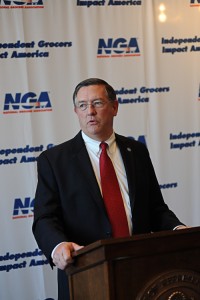
The results were presented at a press conference on Capitol Hill in the House Agriculture Committee Room. Speakers included Peter J. Larkin, President & CEO, NGA; Joseph Sheridan, President & COO, Wakefern Food Corporation and NGA Chairman; The Honorable Rodney Davis (R-IL), and Nate Filler, President & CEO, Ohio Grocers Association.

Larkin released the top-level numbers, including a sales figure of $129.5 billion from almost 21,000 supermarkets in every congressional district. Independent grocers employ 945,000 people, paying over $30 billion in wages and $27 billion in taxes.

“We can take this information to Capitol Hill to show how large our voice is and why our opinions matter on relevant issues,” said Larkin. “We will strive to continue growing our industry by benchmarking these numbers and further creating jobs to enhance our impact.”

In total, the industry is responsible for generating close to 1% of the total US economic output.

“This study now makes tangible what we’ve always known intuitively,” said Sheridan. “The impact of the independent grocer is great, and the independents are the life blood of their communities.”

Congressman Davis, who serves on the House Agriculture Committee, spoke on the important relationship between growers and retailers, and ultimately consumers. “Every one of us is impacted by our local community supermarket,” he said.

Filler, whose organization represents over 400 members in the industry in Ohio, called the research impressive. “Our value in the community goes beyond dollars and cents,” he noted. “Every day in the Buckeye state, grocers are supporting little leagues, soccer teams, spaghetti dinners, and food banks.”

For more information on the study, visit www.GrocersImpactAmerica.com.

Lucky Donates 100 Tons of Store-Generated Compost to School/Community Gardens

Heading 2

Lorem ipsum dolor sit amet, consectetur adipisicing elit. Nostrum minus ea suscipit porro alias corporis libero at. Perferendis omnis, veniam nemo beatae vel? Tempora numquam a repellat eaque natus, magnam?

Heading 2

Lorem ipsum dolor sit amet, consectetur adipisicing elit. Autem ipsum mollitia neque, illum illo excepturi, eum incidunt fugit nostrum est, voluptate eaque minima corporis debitis at, dolores ipsam. Quaerat, dolores.

Heading 2

Lorem ipsum dolor sit amet, consectetur adipisicing elit. Autem ipsum mollitia neque, illum illo excepturi, eum incidunt fugit nostrum est, voluptate eaque minima corporis debitis at, dolores ipsam. Quaerat, dolores.

Heading 2

Lorem ipsum dolor sit amet, consectetur adipisicing elit. Autem ipsum mollitia neque, illum illo excepturi, eum incidunt fugit nostrum est, voluptate eaque minima corporis debitis at, dolores ipsam. Quaerat, dolores.

Heading 2

Lorem ipsum dolor sit amet, consectetur adipisicing elit. Autem ipsum mollitia neque, illum illo excepturi, eum incidunt fugit nostrum est, voluptate eaque minima corporis debitis at, dolores ipsam. Quaerat, dolores.

Donation supports important Bay Area health and education initiatives

luckylogo

Lucky Stores donates 100 tons of compost to school and community gardens to support key health and education initiatives in the Bay Area. This high-quality compost is made from the fresh waste generated in its stores and then back-hauled to a production facility in the Central Valley and made into compost. Lucky packages and stocks the compost in stores and sells to consumers—a practice the company has been conducting since May 1997.

“All of the fresh food that we can no longer sell in our stores is rescued. Consumable products are given to local Feeding America food banks, and our fresh waste is made into high-quality compost,” explains Steve Junqueiro, president and chief operating officer. “Composting has been part of our business operation for years, but today we’re happy to share the product of this work with our communities.”

Understanding the importance of health education and community access to a variety of healthy foods, Lucky has partnered with the following organizations:

  • Burnett Middle School in San Jose in support of the school’s garden—a site also supported by Silicon Valley HealthCorps (SVHC).
  • Oakland Unified School District’s Castlemont High School in support of the school’s new organic garden.
  • Collective Roots in East Palo Alto works to educate and engage youth and communities in food system change through sustainable programs that impact health, education, and the environment. (also supported by SVHC)
  • Contra Costa Master Growers community garden in Walnut Creek, which donates all the food that is grown to the Contra Costa Food Bank, Monument Crisis Center and Loaves and Fishes soup kitchen.
  • Sacramento High School’s Edible Garden provides a transformative experience in food education through an integrated curriculum across three main activities: a school garden, a kitchen classroom, and a student-run cafeteria.

In addition, Lucky has committed 20 tons of compost to school and community gardens in San Francisco through a partnership with Earth Day San Francisco. This compost will be made available to groups at the Daly City Lucky store on Saturday, April 13 from 11 am until the compost is gone.

“The Castlemont Farm project will empower Castlemont’s Sustainable Urban Design Academy students to make a tangible, positive impact on the health and food security of their community,” explained Park Guthrie, Garden-Education Specialist for Oakland Unified School District. “Students will learn about sustainable agriculture, systems theory, ecology, and soil science while developing green job skills as they help grow significant amounts of fresh healthy produce for their community. Such innovative and engaging projects are only possible with the support of partners like Lucky Supermarkets.”

Appropriate handling of the company’s waste is a priority to the company. Last year alone Save Mart, Lucky and FoodMaxx stores:

  • Rescued 1.95 million pounds of food to local food banks
  • Recycled 1.2 million pounds of plastic
  • Recycled 45,000 tons of cardboard
  • Composted 22,669 tons of fresh waste
  • Sold 4,346,910 reusable bags

Save Mart Supermarkets, a California corporation, owns and operates 226 stores in Northern California and Northern Nevada under the Save Mart, S-Mart Foods, Lucky, Maxx Value Foods, and FoodMaxx banners.

For more information on the stores of Save Mart Supermarkets, please visit www.SaveMart.com, www.LuckySupermarkets.com, and www.FoodMaxx.com

Northgate Gonzalez Markets Honored as “Live Well San Diego” Partner

Heading 2

Lorem ipsum dolor sit amet, consectetur adipisicing elit. Nostrum minus ea suscipit porro alias corporis libero at. Perferendis omnis, veniam nemo beatae vel? Tempora numquam a repellat eaque natus, magnam?

Heading 2

Lorem ipsum dolor sit amet, consectetur adipisicing elit. Autem ipsum mollitia neque, illum illo excepturi, eum incidunt fugit nostrum est, voluptate eaque minima corporis debitis at, dolores ipsam. Quaerat, dolores.

Heading 2

Lorem ipsum dolor sit amet, consectetur adipisicing elit. Autem ipsum mollitia neque, illum illo excepturi, eum incidunt fugit nostrum est, voluptate eaque minima corporis debitis at, dolores ipsam. Quaerat, dolores.

Heading 2

Lorem ipsum dolor sit amet, consectetur adipisicing elit. Autem ipsum mollitia neque, illum illo excepturi, eum incidunt fugit nostrum est, voluptate eaque minima corporis debitis at, dolores ipsam. Quaerat, dolores.

Heading 2

Lorem ipsum dolor sit amet, consectetur adipisicing elit. Autem ipsum mollitia neque, illum illo excepturi, eum incidunt fugit nostrum est, voluptate eaque minima corporis debitis at, dolores ipsam. Quaerat, dolores.

The Northgate González supermarket chain became the first business to be recognized by the San Diego County Board of Supervisors under the county’s “Live Well San Diego” program.

Victor Gonzalez accepted a proclamation Monday congratulating the business for helping make it easier for locals to find good, quality food in their neighborhood.

NorthgateMarkets_lowres

The company started with a store on Anaheim Boulevard and has grown to locations in Los Angeles, Orange and San Diego Counties.

There are eight stores in San Diego County including a new location in Barrio Logan. The store is active in the community and offers a nutritional program “Viva La Salud.”

The program offers a special information hotline and weekly messages on health and fitness as well as in-store events that range from cooking demos to mobile medical unit visits.

With Monday’s announcement, county supervisors awarded the company for promoting healthy lifestyles among employees and customers.

“We hope that this is going to spread around the county and get other businesses to realize they have a role in helping people to make healthy choices in the type food they’re going to eat, to not do things that are going to be adverse to their health and to basically have longer and healthier lives,” said Supervisor Greg Cox.

Chronic conditions like heart disease, stroke, Type II Diabetes and respiratory problems can be helped by exercise, better nutrition and less tobacco use Cox said.

Last year, Northgate González Markets received the first California Fresh Works Fund loan.

The fund finances grocery businesses that provide affordable, healthy foods that open stores in communities that do not have supermarkets.

Reprinted from www.nbcsandiego.com (4/16/2013)

Stater Bros. Names Van Helden As President/COO

Heading 2

Lorem ipsum dolor sit amet, consectetur adipisicing elit. Nostrum minus ea suscipit porro alias corporis libero at. Perferendis omnis, veniam nemo beatae vel? Tempora numquam a repellat eaque natus, magnam?

Heading 2

Lorem ipsum dolor sit amet, consectetur adipisicing elit. Autem ipsum mollitia neque, illum illo excepturi, eum incidunt fugit nostrum est, voluptate eaque minima corporis debitis at, dolores ipsam. Quaerat, dolores.

Heading 2

Lorem ipsum dolor sit amet, consectetur adipisicing elit. Autem ipsum mollitia neque, illum illo excepturi, eum incidunt fugit nostrum est, voluptate eaque minima corporis debitis at, dolores ipsam. Quaerat, dolores.

Heading 2

Lorem ipsum dolor sit amet, consectetur adipisicing elit. Autem ipsum mollitia neque, illum illo excepturi, eum incidunt fugit nostrum est, voluptate eaque minima corporis debitis at, dolores ipsam. Quaerat, dolores.

Heading 2

Lorem ipsum dolor sit amet, consectetur adipisicing elit. Autem ipsum mollitia neque, illum illo excepturi, eum incidunt fugit nostrum est, voluptate eaque minima corporis debitis at, dolores ipsam. Quaerat, dolores.

Jack H. Brown, Chairman of the Board and Chief Executive Officer of Stater Bros. Markets, announced that Peter Van Helden has been appointed President and Chief Operating Officer of Stater Bros. Markets. He succeeds Jim Lee, who is retiring as of June 1, 2013.

Van Helden is a 36-year veteran of the supermarket industry.

Van_Helden_Pete

Prior to joining Stater Bros., Van Helden was Executive Vice President Retail Operations for Supervalu. He began his career in 1977, working for Rosauers in Libby, Montana as a Courtesy Clerk.

In 1978, he relocated to Bozeman, Montana where he joined Albertsons as a Clerk. Van Helden joined Supervalu through the company’s 2006 acquisition of Albertsons, where he was President and Chief Executive Officer of Albertsons’ California Food Division.

During his 35-year tenure at Albertsons, Van Helden held a variety of leadership positions including operations, merger integration and dual branding. As President and Chief Executive Officer of Albertsons’ California Food Division, he oversaw a business unit comprised of more than 500 stores and 41,000 associates. Prior to this position and experience, he was President of the company’s Jewel-Osco Division.

Van Helden holds a Bachelor of Science Degree from University of Phoenix.

“Pete is a well respected and long-time Food Industry Executive,” stated Brown. “I am confident that he will do an outstanding job as President and Chief Operating Officer and will be valuable to the future growth of Stater Bros.

Van Helden and his family have purchased a home in the County of San Bernardino.

Save Mart Donates Salad Bars to Central Valley Schools

Heading 2

Lorem ipsum dolor sit amet, consectetur adipisicing elit. Nostrum minus ea suscipit porro alias corporis libero at. Perferendis omnis, veniam nemo beatae vel? Tempora numquam a repellat eaque natus, magnam?

Heading 2

Lorem ipsum dolor sit amet, consectetur adipisicing elit. Autem ipsum mollitia neque, illum illo excepturi, eum incidunt fugit nostrum est, voluptate eaque minima corporis debitis at, dolores ipsam. Quaerat, dolores.

Heading 2

Lorem ipsum dolor sit amet, consectetur adipisicing elit. Autem ipsum mollitia neque, illum illo excepturi, eum incidunt fugit nostrum est, voluptate eaque minima corporis debitis at, dolores ipsam. Quaerat, dolores.

Heading 2

Lorem ipsum dolor sit amet, consectetur adipisicing elit. Autem ipsum mollitia neque, illum illo excepturi, eum incidunt fugit nostrum est, voluptate eaque minima corporis debitis at, dolores ipsam. Quaerat, dolores.

Heading 2

Lorem ipsum dolor sit amet, consectetur adipisicing elit. Autem ipsum mollitia neque, illum illo excepturi, eum incidunt fugit nostrum est, voluptate eaque minima corporis debitis at, dolores ipsam. Quaerat, dolores.

The United Fresh Foundation is pleased to announce a generous grant from the Save Mart CARES charitable organization to support Let’s Move Salad Bars to California Schools. The Save Mart CARES grant will provide salad bars to schools in three Central Valley school districts: Kern High School District in Bakersfield, Alview-Dairyland Unified School District in Chowchilla and the Armona Union Elementary School District in Armona. The donation will benefit 10,000 low-income students and help the United Fresh Foundation close in on their goal of donating salad bars to 350 California schools by May 2013.

”Encouraging families to eat more fruits and vegetables provides immeasurable lifetime health benefits. We believe the most powerful change starts with children. As they get excited about produce through school salad bars they will influence their family to try more fruits and vegetables at home,” Steve Junqueiro, Save Mart President and COO.

Save Mart CARES is the charitable organization of Save Mart Supermarkets that aims to support community initiatives in art, recreation, education and sports. Save Mart Supermarkets operates 226 stores throughout Northern California and Northern Nevada under the Save Mart, S-Mart Foods, Lucky, Maxx Value Foods, and FoodMaxx banners.

“We are very pleased to have Save Mart contribute to the growing momentum behind Let’s Move Salad Bars to California Schools and build on their commitment to local communities and schools,” said Tom Stenzel, United Fresh CEO. “The grant from Save Mart CARES is a great boon to our efforts to increase children’s consumption of fruits and vegetables and combat childhood obesity. Salad bars are the easiest, most effective way for schools to meet the new federal school lunch standards and make it possible for students to “make half their plate fruits and vegetables” as recommended by the 2010 Dietary Guidelines for America,” added Stenzel.

The salad bars will be donated to Arvin High School, Golden Valley High School, South High School, West High School in the Kern High School District, Dairyland Elementary School in the Alview-Dairyland School District, and Armona Elementary School in the Armona Union Elementary School District.

The schools will use the salad bars every day during their lunch service to provide students greater access to a wide variety of fruits and vegetables, to engage parents in conversations about healthier meals at home and to a create healthier school food environment.

Let’s Move Salad Bars to California Schools is a special campaign of the United Fresh Foundation, under the umbrella of the national Let’s Move Salad Bars to Schools initiative, of which the United Fresh is a founding partner. A press event to celebrate Let’s Move Salad Bars to California Schools will be held on May 15, 2013 at the United Fresh 2013 Convention in San Diego. California school food service directors and donors will be recognized at the press event.

United Fresh is collaborating with the California State Department of Education’s Team California for Healthy Kids, a program started by California State Superintendent of Public Instruction Tom Torlakson to increase access to fresh foods and salad bars.

To learn how you can support Let’s Move Salad Bars to California Schools, contact Andrew Marshall, United Fresh policy and grassroots manager at 202-303-3407 or [email protected]. Schools interested in requesting salad bars can visit www.saladbars2schools.org.

Albertsons Chain Sold To Investment Group

Heading 2

Lorem ipsum dolor sit amet, consectetur adipisicing elit. Nostrum minus ea suscipit porro alias corporis libero at. Perferendis omnis, veniam nemo beatae vel? Tempora numquam a repellat eaque natus, magnam?

Heading 2

Lorem ipsum dolor sit amet, consectetur adipisicing elit. Autem ipsum mollitia neque, illum illo excepturi, eum incidunt fugit nostrum est, voluptate eaque minima corporis debitis at, dolores ipsam. Quaerat, dolores.

Heading 2

Lorem ipsum dolor sit amet, consectetur adipisicing elit. Autem ipsum mollitia neque, illum illo excepturi, eum incidunt fugit nostrum est, voluptate eaque minima corporis debitis at, dolores ipsam. Quaerat, dolores.

Heading 2

Lorem ipsum dolor sit amet, consectetur adipisicing elit. Autem ipsum mollitia neque, illum illo excepturi, eum incidunt fugit nostrum est, voluptate eaque minima corporis debitis at, dolores ipsam. Quaerat, dolores.

Heading 2

Lorem ipsum dolor sit amet, consectetur adipisicing elit. Autem ipsum mollitia neque, illum illo excepturi, eum incidunt fugit nostrum est, voluptate eaque minima corporis debitis at, dolores ipsam. Quaerat, dolores.

Shop owner Mimi Ko said she was “shocked” when she heard about the sale Thursday of Albertsons grocery stores to an investment group.

She was worried about the effect on her business, which is next to one of two Albertsons locations in Redondo Beach.

“We need it,” said Ko, who owns Mimi’s Cleaners. “All my customers go to this market. When they go there, they come here. … It’s so important to me. ”

Minneapolis, Minn.-based SuperValu Inc. said Thursday that it sold its Albertsons stores and four other grocery chains to AB Acquisition LLC, an investment group affiliated with investment giant Cerberus Capital Management L.P. The stock deal was valued at $3.3 billion, including $100 million in cash and $3.2 billion in debt assumption.

Albertsons has been a major financial drag on SuperValu, which has tried to cut losses by closing locations.

In September, SuperValu said it was closing 60 underperforming Albertsons stores, including 18 in Southern California. Some of the affected stores were in Long Beach, Los Angeles, Northridge and Riverside.

In June, Albertsons announced layoffs of as many as 2,500 employees in Southern California and southern Nevada supermarkets. Albertsons has 228 stores in California from the Central Coast to San Diego and eastward to the Inland Empire and Southern Nevada.

Albertsons declined to answer questions about the chain’s future, whether more stores will close or if employees will be laid off.

Spokeswoman Christine Wilcox said in an email that the company will give more details about the sale today after the new owners “officially begin running the stores. ”

In a statement, SuperValu President and CEO Sam Duncan expressed confidence in the sale of the money-losing Albertsons.

“The successful completion of this transaction marks a significant milestone for SuperValu and our shareholders, customers and employees,” Duncan said. “I am pleased to be leading SuperValu during this time of change and strongly believe there is an exciting future ahead for us. ”

Albertsons has faced intense competition from other grocery chains as well as such retailers as Wal-Mart and Target, which often undercut the prices of traditional grocery stores to draw customers who then purchase household goods like children’s clothing and bed sheets.

Fresh & Easy Neighborhood Market, an El Segundo-based grocery chain owned by Britain’s Tesco retail giant, has also faced a difficult time getting out of the red. Tesco is currently looking for a buyer or partner for its Fresh & Easy chain, which is spread across Southern California and Nevada.

On Thursday, Jay Sheldon went to the Albertsons in north Redondo Beach to buy propane. He expressed concern for the fate of the employees there.

“If you keep this store open and they treat the employees as well or better, that would be good,” said Sheldon, 64, of Hermosa Beach. “It’s convenient. We’ll come by here and see what their specials are. ”

However, Sheldon offered an observation that speaks to the problems facing Albertsons.

“It’s never that busy,” he said. “The parking is easy here. ”

Reprinted from the Los Angeles Daily News (3/21/2013)

More Men Doing The Grocery Shopping

Heading 2

Lorem ipsum dolor sit amet, consectetur adipisicing elit. Nostrum minus ea suscipit porro alias corporis libero at. Perferendis omnis, veniam nemo beatae vel? Tempora numquam a repellat eaque natus, magnam?

Heading 2

Lorem ipsum dolor sit amet, consectetur adipisicing elit. Autem ipsum mollitia neque, illum illo excepturi, eum incidunt fugit nostrum est, voluptate eaque minima corporis debitis at, dolores ipsam. Quaerat, dolores.

Heading 2

Lorem ipsum dolor sit amet, consectetur adipisicing elit. Autem ipsum mollitia neque, illum illo excepturi, eum incidunt fugit nostrum est, voluptate eaque minima corporis debitis at, dolores ipsam. Quaerat, dolores.

Heading 2

Lorem ipsum dolor sit amet, consectetur adipisicing elit. Autem ipsum mollitia neque, illum illo excepturi, eum incidunt fugit nostrum est, voluptate eaque minima corporis debitis at, dolores ipsam. Quaerat, dolores.

Heading 2

Lorem ipsum dolor sit amet, consectetur adipisicing elit. Autem ipsum mollitia neque, illum illo excepturi, eum incidunt fugit nostrum est, voluptate eaque minima corporis debitis at, dolores ipsam. Quaerat, dolores.

Almost 500 years after John Donne proclaimed that no man is an island, it can now be said that some men have a man aisle — a sign of the grocery-shopping times that illustrates how roles have shifted in 21st century families.

This month, the National Retail Federation’s Stores Magazine even reports that there’s a change afoot in who’s doing the shopping, though this shift first came to light via 2010 U.S. Census figures, which revealed 20% of fathers with preschool-aged children and working wives were the primary caregivers at home.

Yet, if the media needed more tangible proof, it found it in a somewhat silly place: the corner of a New York City grocery store dedicated to manly goods, and dubbed “The Man Isle” [sic] by the operators of Westside Market NYC. Media outlets such as the New York Post and Los Angeles Times couldn’t get enough, though a closer look reveals that this “man aisle” is more marketing gimmick than manly substance. Check out the store photos posted by Business Insider and you’ll see what we mean: Doritos? Ramen noodles? Teriyaki beef jerky? Hmmm. Could this really be the “caveman aisle” instead?

Still, the hype over one store’s cheap (and successful) publicity stunt can’t obscure the overarching facts: More men grocery shop today than the guys of previous generations. Chalk up the Great Recession as a key factor: The Center for American Progress reports that between December 2007 and mid-2009, a sharp rise occurred in the number of married couples where the woman was left to bring home the bacon because her husband was unemployed. And so the men (including yours truly) stepped up to literally bring home the bacon.

But do men need a “man aisle” to get the hang of grocery shopping, or is such a dedicated aisle merely a crutch for men to feel more comfortable and macho at the supermarket? Historical trends lead us to believe that the answer is no; just as women have diversified in skills and opportunities over the last few generations, we now see more men cooking at home, and taking an interest in the gourmet offerings at stores such as Trader Joe’s and Whole Foods. And as the reporter of this story can attest, a family that’s bucking traditional gender roles in the name of making complicated economic times work, needs no incentive from gimmicky man aisles.

But don’t expect the “man aisle” trend to slow down anytime soon. Nielsen reported in 2011 that men are shopping more than ever, while the St. Louis Post-Dispatch cites statistics showing that 31% of grocery shopping is being done by men, up from about 14% in the 1980s.

That study, by the way, was done by the broadcast equivalent of the man aisle: ESPN, the sports network. That fact alone speaks volumes to us. But what say you, dealnews readers? Are you a household wherein the man handles the domestic duties? If so, do you find these man aisles enticing or irrelevant? Sound off in the comments below.

Reprinted from The Christian Science Monitory (3/26/2013)