Heading 2
Lorem ipsum dolor sit amet, consectetur adipisicing elit. Nostrum minus ea suscipit porro alias corporis libero at. Perferendis omnis, veniam nemo beatae vel? Tempora numquam a repellat eaque natus, magnam?
Heading 2
Lorem ipsum dolor sit amet, consectetur adipisicing elit. Autem ipsum mollitia neque, illum illo excepturi, eum incidunt fugit nostrum est, voluptate eaque minima corporis debitis at, dolores ipsam. Quaerat, dolores.
Heading 2
Lorem ipsum dolor sit amet, consectetur adipisicing elit. Autem ipsum mollitia neque, illum illo excepturi, eum incidunt fugit nostrum est, voluptate eaque minima corporis debitis at, dolores ipsam. Quaerat, dolores.
Heading 2
Lorem ipsum dolor sit amet, consectetur adipisicing elit. Autem ipsum mollitia neque, illum illo excepturi, eum incidunt fugit nostrum est, voluptate eaque minima corporis debitis at, dolores ipsam. Quaerat, dolores.
Heading 2
Lorem ipsum dolor sit amet, consectetur adipisicing elit. Autem ipsum mollitia neque, illum illo excepturi, eum incidunt fugit nostrum est, voluptate eaque minima corporis debitis at, dolores ipsam. Quaerat, dolores.
 When Long Beach passed its carryout bag ordinance on May 17th, it became the fourth jurisdiction in Southern California to pass such an law. Despite the failure of the Legislature to pass AB 1998 and create a single state-wide standard, SoCal governments have mostly passed bills that closely mirror the County of Los Angeles, which was the first jurisdiction to pass such an ordinance in the region.
There are only a few weeks left before most grocers must begin implementing the new regulations. A few things to consider:
1) CGA is producing a poster that you can post in your stores to prepare your customers for Los Angeles County ordinance.
2) The County is prepared to cooperate with stores to give out free reusable bags and educate consumers about the upcoming changes to the checkout process. If you are interested in working with the County, call Nilda Gemeniano at 626-458-5184.
3) LA County information
4) Santa Monica information
5) Calabasas information
6) Long Beach information
In addition, the County has provided CGA with some answers to common questions about the their ordinance:
1) For EBT customers, do we give free recyclable paper bags to the customers that are purchasing taxable non food items with the cash portion of their publically funded EBT card?
WIC and SNAP participants are the only customers to be provided free carryout bags for their purchases. Affected stores would develop and incorporate into their operations methods of confirming customer participation in these programs.
2) Do we charge 10 cents for the small bags such as number #8, #12 and #735? Sometimes these small bags are used to wrap and protect individual items, such as wine and glassware, and sometimes these bags are used as final carryout bags for small items.
When paper bags are being used as carryout bags, they must be charged 10 cents/bag.
3) Are the small poly carryout bags that are used for greeting cards authorized to keep in the stores, and do we charge 10 cents for them?
Affected stores must not use any plastic carryout bags except for produce/food bags. Paper bags that are used to carry out greeting cards and other small items will be charged 10 cents/bag. The stores should ask the customer if they want a bag.
4) We have a large carryout bag with handles for our hot food in the Service Delis. Do we need to discontinue using this bag? If we are authorized to keep this bag, do we charge the 10 cent fee?
If the service deli is part of the affected store, then they must stop using plastic carryout bags. If this large carryout bag is a paper bag, the deli/store must charge 10 cents/bag.
5) Do we charge sales tax on the 10 cent bag fee?
Los Angeles County is not a taxing agency. In developing the Ordinance, we contacted the State Board of Equalization. They advised us that since the paper carryout bag is a “container”, it falls under the Container Rule – Reg. 1589. As long as there are taxable items in the paper bag the charge would be subject to tax, but if there are no taxable items in the paper bag the charge would not be subject to tax.

 City enforcement personnel in Pasadena recently tied grocers in a bind by aggressively fining members up to $100 for each cart found off a store’s premises, regardless of efforts to keep carts on store property. After several discussions with staff and council offices, it is obvious that the city has a confrontational attitude towards grocers and intends to continue its zero-tolerance policy towards abandoned carts. Further, the activity is not staff-driven but was actually implemented at Council’s direction. CGA is publishing a letter-to-the-editor in the local paper and continuing to schedule meetings with council members and staff to present the industry position. Even so, there is no easy fix to this crisis and nothing in the pipeline to suggest that the enforcement activity will cease anytime soon. CGA will be scheduling a conference call to coordinate strategy to attack the problem and would like industry participation in an upcoming meeting with City officials. If your company has been impacted by this activity, please call Matthew Dodson at 818-841-8640 to discuss.
 Grocers have taken grief from the Public Health Department at Los Angeles County for years, from the attempted criminalization of turkey trailers to misinformed inspectors to misguided attempts to have the County social engineer customers’ eating and drinking habits. Two recent issues demonstrate that Los Angeles County still can’t seem to get its house in order.
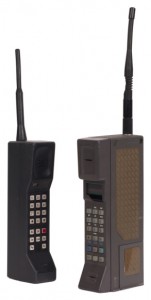 The San Francisco Department of Environment (DOE) is notifying retailers of delayed enforcement of the Cell Phone Right-to-Know Ordinance. This ordinance would require retailers to post Specific Absorption Rate (SAR) information when selling cell phones. Information on this delayed ordinance is available here.
 Over the next few days a tremendous amount of media coverage will focus on redistricting of state legislative and congressional districts. Much of the story will focus on the
  On May 26 the Marin County Single Use Plastic Advisory Committee (SUPAC) finalized their recommendations on carryout bag and food packaging regulations. The purpose of this committee is to provide policy recommendations to six Marin County cities in order to create regional consistency. The SUPAC is made up of the cities of Mill Valley, Novato, San Anselmo, San Rafael, Sausalito, and Tiburon.
 There is a chance 10 Sonoma County jurisdictions could pass a bag ban at the exact same moment. Synchronizing watches is not involved. What is involved is the Sonoma County Waste Management Agency (SCWMA).
 In the absence of a County Supervisor the Governor of California picks the replacement, not the voters, according to state law. After the untimely passing of Marin County Supervisor Charles McGlashan in late March it was up to Governor Jerry Brown to appoint his replacement. Enter new Marin County Supervisor member Kathrin “Kate” Sears.