Lorem ipsum dolor sit amet, consectetur adipisicing elit. Nostrum minus ea suscipit porro alias corporis libero at. Perferendis omnis, veniam nemo beatae vel? Tempora numquam a repellat eaque natus, magnam?
Heading 2
Lorem ipsum dolor sit amet, consectetur adipisicing elit. Autem ipsum mollitia neque, illum illo excepturi, eum incidunt fugit nostrum est, voluptate eaque minima corporis debitis at, dolores ipsam. Quaerat, dolores.
Heading 2
Lorem ipsum dolor sit amet, consectetur adipisicing elit. Autem ipsum mollitia neque, illum illo excepturi, eum incidunt fugit nostrum est, voluptate eaque minima corporis debitis at, dolores ipsam. Quaerat, dolores.
Heading 2
Lorem ipsum dolor sit amet, consectetur adipisicing elit. Autem ipsum mollitia neque, illum illo excepturi, eum incidunt fugit nostrum est, voluptate eaque minima corporis debitis at, dolores ipsam. Quaerat, dolores.
Heading 2
Lorem ipsum dolor sit amet, consectetur adipisicing elit. Autem ipsum mollitia neque, illum illo excepturi, eum incidunt fugit nostrum est, voluptate eaque minima corporis debitis at, dolores ipsam. Quaerat, dolores.
Anyone who wandered into the state Capitol this week might conclude that important business was being done.
The floors of both legislative houses are going full blast, working through more than 500 bills – the core of this year’s legislative agenda.
Meanwhile, a two-house conference committee is chewing through two versions of the 2015-16 state budget, supposedly reconciling their differences.
Lobbyists crowd the hallways, trying to have their way with legislators. And outside the Capitol, demonstrations and rallies are being staged by various interest groups, hoping to influence what’s happening inside.
What’s happening this week, however, is by no means definitive of anything. It’s all very preliminary, merely setting the stage for the real decision-making that will come later.
The floors are going due to a legislative rule that all bills must clear their “house of origin” by Friday and be sent to the other house.
Almost none of them are being rejected for the simple reason that the appropriations committees of both houses, acting on behalf of legislative leaders, pre-decided – in secrecy – which would reach the floors.
The real decisions on which bills will reach Gov. Jerry Brown’s desk won’t be made until August or even September.
They must clear the committees of the second house, the floor of the second house and then, almost always, a final vote in the house of origin before being sent to the governor.
Casting votes for or against measures now is easy because, in effect, those votes don’t count. And if history is any guide, quite a few of the bills being approved this week with flowery speeches and self-congratulatory press releases will never make it back, or be amended to something quite different.
The 500-plus bills going through the mill this week are, in the main, a very liberal agenda, spending many millions or even billions of dollars on new social, medical and educational benefits, plus imposing new costs on businesses, such as the minimum wage hike approved by the Senate on Monday.
Brown, however, has publicly warned against massive new spending and has looked askance at bills considered to be “job killers” by business groups, so when he finally passes the word on what he’ll accept, the agenda will likely shrink.
Indeed, about a third of the bills given that epithet by the California Chamber of Commerce have already fallen by the wayside.
The same dynamic is evident in the budget, which must, by law, be enacted by June 15, lest legislators lose their salaries.
Democrats want billions of dollars in spending, mostly for the poor, beyond what Brown has proposed and closed-door negotiations will eventually produce the budget he wants, or at least deems acceptable.
In brief, what’s happening this week in and around the Capitol is just a practice game – spring training, as it were, for the real games ahead.
Lorem ipsum dolor sit amet, consectetur adipisicing elit. Nostrum minus ea suscipit porro alias corporis libero at. Perferendis omnis, veniam nemo beatae vel? Tempora numquam a repellat eaque natus, magnam?
Heading 2
Lorem ipsum dolor sit amet, consectetur adipisicing elit. Autem ipsum mollitia neque, illum illo excepturi, eum incidunt fugit nostrum est, voluptate eaque minima corporis debitis at, dolores ipsam. Quaerat, dolores.
Heading 2
Lorem ipsum dolor sit amet, consectetur adipisicing elit. Autem ipsum mollitia neque, illum illo excepturi, eum incidunt fugit nostrum est, voluptate eaque minima corporis debitis at, dolores ipsam. Quaerat, dolores.
Heading 2
Lorem ipsum dolor sit amet, consectetur adipisicing elit. Autem ipsum mollitia neque, illum illo excepturi, eum incidunt fugit nostrum est, voluptate eaque minima corporis debitis at, dolores ipsam. Quaerat, dolores.
Heading 2
Lorem ipsum dolor sit amet, consectetur adipisicing elit. Autem ipsum mollitia neque, illum illo excepturi, eum incidunt fugit nostrum est, voluptate eaque minima corporis debitis at, dolores ipsam. Quaerat, dolores.
The California Grocers Association released the first in a series of Grocery Compliance Toolkits at two regional seminars on May 12, 13.
The first toolkit addresses the complexities of hazardous waste disposal. CGA has contracted with Environmental Resources Management (ERM), the world’s leading sustainability consultancy, and the Sacramento-based law firm of Downey Brand LLP, to create this comprehensive, user-friendly toolkit for hazardous waste disposal.
More than 80 grocery retailers from throughout California participated in the two seminars. Representatives from ERM and Downey Brand provided an overview of California’s comprehensive hazardous waste disposal regulations and explained how to utilize the toolkit.
CGA will host a one-hour hazardous waste disposal toolkit webinar on Wednesday, June 10, 2015, from 10:00 – 11:00 am for CGA members unable to attend the seminar. Webinar attendees will be provided an electronic version of the toolkit.
Lorem ipsum dolor sit amet, consectetur adipisicing elit. Nostrum minus ea suscipit porro alias corporis libero at. Perferendis omnis, veniam nemo beatae vel? Tempora numquam a repellat eaque natus, magnam?
Heading 2
Lorem ipsum dolor sit amet, consectetur adipisicing elit. Autem ipsum mollitia neque, illum illo excepturi, eum incidunt fugit nostrum est, voluptate eaque minima corporis debitis at, dolores ipsam. Quaerat, dolores.
Heading 2
Lorem ipsum dolor sit amet, consectetur adipisicing elit. Autem ipsum mollitia neque, illum illo excepturi, eum incidunt fugit nostrum est, voluptate eaque minima corporis debitis at, dolores ipsam. Quaerat, dolores.
Heading 2
Lorem ipsum dolor sit amet, consectetur adipisicing elit. Autem ipsum mollitia neque, illum illo excepturi, eum incidunt fugit nostrum est, voluptate eaque minima corporis debitis at, dolores ipsam. Quaerat, dolores.
Heading 2
Lorem ipsum dolor sit amet, consectetur adipisicing elit. Autem ipsum mollitia neque, illum illo excepturi, eum incidunt fugit nostrum est, voluptate eaque minima corporis debitis at, dolores ipsam. Quaerat, dolores.
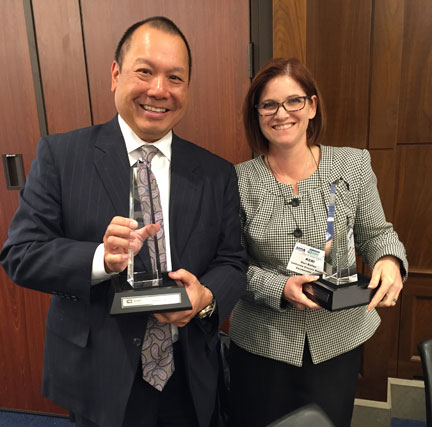
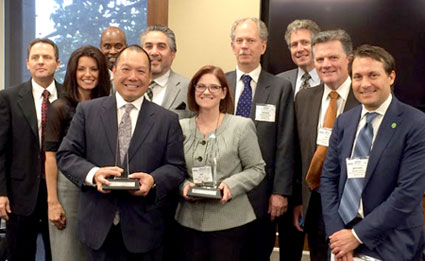
CGA President and CEO Ronald Fong, and Keri Askew Bailey, CGA senior vice president, Government Relations and Public Policy, were awarded the Food Marketing Institute’s Donald H. MacManus Award, the highest recognition for a state affairs executive,during FMI’s annual lobby day in Washington, DC, for their public affairs excellence. This is the first time two individuals from the same association have been honored in the same year.
CGA President/CEO Ron Fong and Keri Askew Bailey, senior vice president of Government Relations and Public Policy receive Donald MacManus Award.
“There is no one more worthy of this prestigious award than Ron Fong,” said CGA Chairman of the Board Joe Falvey, Unified Grocers, Inc. “His leadership and vision has brought CGA to the forefront of grocery associations. Keri Askew Bailey is also to be commended for leading CGA’s government relations team and implementing the association’s advocacy program. CGA congratulates both on a well-deserved award.”
Fong is a political strategist and his legislative alliances with state and national trade associations helped in defeating statewide legislation on GMO-labeling requirements and assisted in the passage of the first statewide bag usage law in 2014. He also led the association in its merger with the California Independent Grocers Association (CIGA), which united 179 independent grocers and suppliers with CGA’s existing membership. In his role as CEO, Fong oversees the association’s strategic direction and staff, which manages departments in government relations, communications, member services and business conferences.
“Ron Fong and Keri Askew Bailey exemplify the power of grassroots through their tireless efforts advocating on behalf of California retailers grocers on a multitude of state issues,” said FMI President Leslie Sarasin, “especially those issues related to the defeat of Proposition 37; fighting local sugarysugar-sweetened beverages drink warning labels and taxes; and passing a state-wide plastic bag bill with local preemption.”
Askew Bailey has worked on significant policy issues including Proposition 65; the Green Chemistry Initiative; attempts to curb deployment of assisted self-checkout technology in the state; and proposed state and local GMO- and sugar-sweetened beverage labeling. She has also worked to increase CGA’s visibility at the state Capitol and in local City Council and Board of Supervisors chambers across the stateand local government levels.
Left to right Richie Morgan, Shanna Morgan, North State Grocery; Jonathan Mayes, Albertsons/Safeway; Ron Fong, CGA; Bob Gutierrez, Food 4 Less (Stockton); Dennis Darling, Foods Etc.; Kevin Davis, Bristol Farms; Joe Falvey, Unified Grocers, Inc; and Mike Amiri, Nutricion Fundamental, Inc.
“Keri & Ron work tirelessly to advocate for California’s food retailers, suppliers and employees at the state, federal and local levels,” said CGA Government Relations Committee Chair Mary Kasper, Fresh & Easy. “CGA is deeply appreciative of their extraordinary vision and leadership.”
Lorem ipsum dolor sit amet, consectetur adipisicing elit. Nostrum minus ea suscipit porro alias corporis libero at. Perferendis omnis, veniam nemo beatae vel? Tempora numquam a repellat eaque natus, magnam?
Heading 2
Lorem ipsum dolor sit amet, consectetur adipisicing elit. Autem ipsum mollitia neque, illum illo excepturi, eum incidunt fugit nostrum est, voluptate eaque minima corporis debitis at, dolores ipsam. Quaerat, dolores.
Heading 2
Lorem ipsum dolor sit amet, consectetur adipisicing elit. Autem ipsum mollitia neque, illum illo excepturi, eum incidunt fugit nostrum est, voluptate eaque minima corporis debitis at, dolores ipsam. Quaerat, dolores.
Heading 2
Lorem ipsum dolor sit amet, consectetur adipisicing elit. Autem ipsum mollitia neque, illum illo excepturi, eum incidunt fugit nostrum est, voluptate eaque minima corporis debitis at, dolores ipsam. Quaerat, dolores.
Heading 2
Lorem ipsum dolor sit amet, consectetur adipisicing elit. Autem ipsum mollitia neque, illum illo excepturi, eum incidunt fugit nostrum est, voluptate eaque minima corporis debitis at, dolores ipsam. Quaerat, dolores.
Grocery retailers and suppliers from throughout California gathered in Sacramento on Wednesday, April 8, to discuss key industry issues with state legislators and staff during CGA’s Annual Grocers Day at the Capitol.
More than 60 grocers and suppliers participated in this one-day annual event that included face-to-face meetings with legislators in the State Capitol. Prior to their Capitol visits, attendees heard from freshman Assemblymember David Hadley (R-Torrance) and political insider Paul Mitchell.
“Grocers Day is our industry’s opportunity to talk face to face with state elected officials and discuss the key legislation being considered,” said CGA President/CEO Ron Fong. “This year was particularly important due to the challenging legislation now before both houses.”
To maximize their legislative visits, attendees were separated into smaller groups and pre-assigned legislators with stores in their district. CGA staff supplied each attendee with talking points and leave behind material on three key pieces of legislation, including:
AB 359 (Gonzalez) – Grocery Worker Retention
AB 305 (Gonzalez) Workers’ Compensation Apportionments
AB 357 (Chiu) Employee Scheduling
Following Grocers Day, attendees and legislators were invited to CGA’s annual President’s Reception at the Association’s headquarters, which provided a more causal atmosphere to further discuss industry topics.
Lorem ipsum dolor sit amet, consectetur adipisicing elit. Nostrum minus ea suscipit porro alias corporis libero at. Perferendis omnis, veniam nemo beatae vel? Tempora numquam a repellat eaque natus, magnam?
Heading 2
Lorem ipsum dolor sit amet, consectetur adipisicing elit. Autem ipsum mollitia neque, illum illo excepturi, eum incidunt fugit nostrum est, voluptate eaque minima corporis debitis at, dolores ipsam. Quaerat, dolores.
Heading 2
Lorem ipsum dolor sit amet, consectetur adipisicing elit. Autem ipsum mollitia neque, illum illo excepturi, eum incidunt fugit nostrum est, voluptate eaque minima corporis debitis at, dolores ipsam. Quaerat, dolores.
Heading 2
Lorem ipsum dolor sit amet, consectetur adipisicing elit. Autem ipsum mollitia neque, illum illo excepturi, eum incidunt fugit nostrum est, voluptate eaque minima corporis debitis at, dolores ipsam. Quaerat, dolores.
Heading 2
Lorem ipsum dolor sit amet, consectetur adipisicing elit. Autem ipsum mollitia neque, illum illo excepturi, eum incidunt fugit nostrum est, voluptate eaque minima corporis debitis at, dolores ipsam. Quaerat, dolores.
California Department of Food and Agriculture Secretary Karen Ross addressed the CGA Board of Directors on Thursday, April 10, on the impact of California’s ongoing drought.
Secretary Ross said the state is going to have to make “some very hard decisions in this very serious time.”
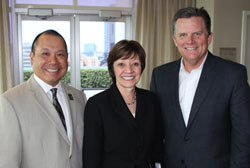
Ron Fong, CGA President; Secretary Karen Ross; CGA Chair Joe Falvey, Unified Grocers, Inc.
She said California should look to countries like Australia to better understand the impact of long-term droughts, including the critical importance of water conservation. She said Australians, who have endured an ongoing drought for nearly two decades, would be shocked by California’s lack of sustained water conservation, saying “drought fatigue” coupled with some rain this past month has created a false sense of water security with many Californian’s abandoning their water conservation efforts. The latest monthly statewide water conservation numbers were at their lowest levels since the drought began.
In developing solutions to California’s drought and ever-growing water challenges, entities involved in water management and usage will need to better understand how it is used and the multiple benefits of every water molecule.
She told the Board there needs to be more cooperative agreements between groups with different water priorities, singling out the adversarial relationship between farmers and environmentalists. She called on California’s rich history of cooperation to help fuel the innovation needed to prepare and reduce the impact of future droughts.
Secretary Ross recognized the importance of the grocery industry, saying it is “a critical part of our food chain.” She said her department wants to partner with the grocery industry. She thanked grocery retailers involved in the state’s California Grown program and encouraged all retailers to participate.
Lorem ipsum dolor sit amet, consectetur adipisicing elit. Nostrum minus ea suscipit porro alias corporis libero at. Perferendis omnis, veniam nemo beatae vel? Tempora numquam a repellat eaque natus, magnam?
Heading 2
Lorem ipsum dolor sit amet, consectetur adipisicing elit. Autem ipsum mollitia neque, illum illo excepturi, eum incidunt fugit nostrum est, voluptate eaque minima corporis debitis at, dolores ipsam. Quaerat, dolores.
Heading 2
Lorem ipsum dolor sit amet, consectetur adipisicing elit. Autem ipsum mollitia neque, illum illo excepturi, eum incidunt fugit nostrum est, voluptate eaque minima corporis debitis at, dolores ipsam. Quaerat, dolores.
Heading 2
Lorem ipsum dolor sit amet, consectetur adipisicing elit. Autem ipsum mollitia neque, illum illo excepturi, eum incidunt fugit nostrum est, voluptate eaque minima corporis debitis at, dolores ipsam. Quaerat, dolores.
Heading 2
Lorem ipsum dolor sit amet, consectetur adipisicing elit. Autem ipsum mollitia neque, illum illo excepturi, eum incidunt fugit nostrum est, voluptate eaque minima corporis debitis at, dolores ipsam. Quaerat, dolores.
Event Photographs Below
More than 700 friends, family and industry peers celebrated the induction of three grocery industry executives into the California Grocers Association Educational Foundation Hall of Achievement on March 26, 2015 in Sacramento, CA.
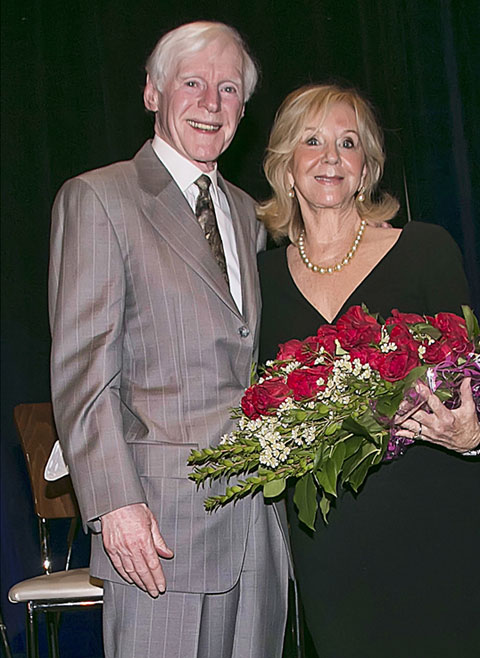
Jim and Joyce Raley Teel
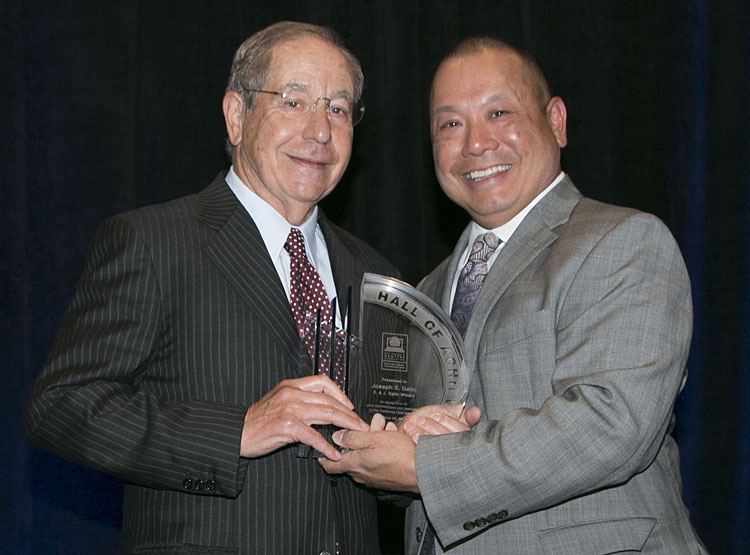
Jim and Joyce Raley Teel, Raley’s Family of Fine Stores, and Joseph E. Gallo, E. & J. Gallo Winery, join a prestigious group of Hall of Achievement recipients who have been recognized for their many contributions to not only the grocery industry, but the communities they serve.
“This year’s inductees are true icons of our industry. It is with great pleasure that we recognize Jim, Joyce, and Joe, for their lifelong commitment to the grocery industry,” said CGAEF President Ron Fong. “Their stories personify hundreds of similar families, including my own, who experienced the American dream of creating successful businesses through hard work, dedicated service and reliance on the strength of family.”
Led by this year’s event chairs Mike Teel, Raley’s Family of Fine Stores, and Gary Ippolito, E. & J. Gallo Winery, the event raised more than $500,000 – funds that support the Foundation’s college scholarship and tuition reimbursement programs.
“It is very gratifying to celebrate the spirit of family business by honoring two California families with deep roots in the Golden State’s grocery industry,” Fong said.
The evening featured an inspiring speech by Raley’s employee Albert Enemuoh, a CGAEF scholarship recipient. After his presentation, guests bid on live auction items and participated in a Fund-A-Need supporting CGAEF’s college scholarship and tuition reimbursement programs.
Joe Gallo with CGA President Ron Fong
The CGA Educational Foundation was created under the direction of the California Grocers Association Board of Directors in 1992. Its mission is to provide financial assistance to advance the educational goals of CGA member company employees and their dependents and offer educational programs to advance the grocery industry. For more information regarding CGAEF programs and for a complete listing of past Hall of Achievement honorees, visit www.cgaef.org.
About our honorees:
James E. Teel, Co-chair Emeritus, Board of Directors Joyce Raley Teel, Owner and Co-chair Emeritus, Board of Directors
James E. Teel celebrates 65 years of service with Raley’s in 2014. Jim began working for Thomas P. Raley as a bottle sorter while attending McClatchy High School in Sacramento. He continued to work for Raley’s while he earned his bachelor’s degree in Business Administration from Sacramento State College in 1952.
Jim learned the grocery business from the ground up – loading, unloading and driving delivery trucks, as well as working as a Grocery Clerk and Produce Clerk. After college graduation, he worked as an Apprentice Butcher at store level for two years. He was then promoted to Meat Buyer and began working at Raley’s corporate office. While there, he helped set up the company’s central control operation for merchandising and buying, and became the company’s first Personnel Director in 1958. Over the years, Jim became a trusted adviser to owner, Tom Raley, serving as Vice President of Operations and later Chairman of the Board. He now serves as Co-chair Emeritus with his wife, Joyce, whom he married in 1950. He served on the board of the Northern California Grocers Association for 15 years and is a former president of that organization.
Joyce Raley Teel, daughter of Raley’s founder Thomas P. Raley, is the owner of the company and serves as Co-chair Emeritus with her husband. Joyce grew up working in her father’s stores and officially joined the company in 1985. A strong believer in supporting her community, Joyce co-founded Raley’s Food For Families program, providing food assistance in partnership with food banks. This effort has since raised $31 million and 21 million pounds of food in the communities served by Raley’s stores.
Joyce started the Thomas P. Raley Foundation for family philanthropic endeavors in 1995. In 1998, she established the Joyce Raley Teel Scholarship to assist employees and their family members in their educational pursuits. Joyce also strongly supports the local arts community.
Jim and Joyce have five children. Their son, Mike Teel, serves as President and CEO of Raley’s. Two of their daughters (Laurie Struck and Lisa Davidson) and two sons-in-law sit on Raley’s Board of Directors.
Raley’s Family of Fine Stores operates 128 stores in California and Nevada. The company includes Bel Air Markets, Nob Hill Foods and Food Source stores.
Joseph Gallo, E. & J. Gallo Winery
Joseph E. Gallo, is President and Chief Executive Officer of the E. & J. Gallo Winery, the world’s largest family-owned winery. The company has a significant presence in the California wine, brandy and distilled spirits industries with eight wineries and more than 60 brands including table and sparkling wines, dessert wines and distilled spirits.
As President and CEO, Mr. Gallo has focused much of his energy on growing the company and has overseen a number of acquisitions including Barefoot, Louis M. Martini, Mirassou Vineyards, William Hill Estate, Columbia Winery and, most recently, Edna Valley Vineyards. He has also directed the expansion of the company’s import portfolio with entries from nine different countries as well as the introduction of New Amsterdam Gin, New Amsterdam Vodka and Familia Camarena Tequila.
Mr. Gallo joined the winery’s sales department in 1965, and was instrumental in the company gaining national distribution by 1970, applying lessons learned from working alongside his father, Ernest Gallo, and his uncle, Julio Gallo. Prior to becoming CEO in 2001, he focused most of his efforts on the company’s expansion into international markets, overseeing sales, distribution, marketing and operations. Today, Gallo International has various regional headquarters around the world. In the United States, Mr. Gallo has served on the Board of Directors for the Wine Institute of California since 1972, and the Grocery Manufacturers Association since 2001. Mr. Gallo has served on the Stanford University Graduate School of Business Advisory Council. Stanford University recognized Mr. Gallo with the Stanford Associates Achievement Award.
Born in Modesto, California, March 12, 1941, to Ernest and Amelia Gallo, Mr. Gallo spent his youth working in the family business. He graduated from the University of Notre Dame in 1962, and earned his M.B.A. from the Stanford Business School in 1964. He and his wife, Ofelia, are the parents of three children, Stephanie, Ernest and Joseph and have six grandchildren.
Mr. Gallo and the Gallo family are committed to helping grow wine consumption throughout the world and contributing to the long-term success of the global wine industry. The Gallo family considers family ownership its greatest asset and believes that the benefits of private ownership enable long-term business sustainability through investment back into physical assets, brand building, vineyard research and continued long-term relationships with winery employees, growers, distributors, retailers and customers.
Lorem ipsum dolor sit amet, consectetur adipisicing elit. Nostrum minus ea suscipit porro alias corporis libero at. Perferendis omnis, veniam nemo beatae vel? Tempora numquam a repellat eaque natus, magnam?
Heading 2
Lorem ipsum dolor sit amet, consectetur adipisicing elit. Autem ipsum mollitia neque, illum illo excepturi, eum incidunt fugit nostrum est, voluptate eaque minima corporis debitis at, dolores ipsam. Quaerat, dolores.
Heading 2
Lorem ipsum dolor sit amet, consectetur adipisicing elit. Autem ipsum mollitia neque, illum illo excepturi, eum incidunt fugit nostrum est, voluptate eaque minima corporis debitis at, dolores ipsam. Quaerat, dolores.
Heading 2
Lorem ipsum dolor sit amet, consectetur adipisicing elit. Autem ipsum mollitia neque, illum illo excepturi, eum incidunt fugit nostrum est, voluptate eaque minima corporis debitis at, dolores ipsam. Quaerat, dolores.
Heading 2
Lorem ipsum dolor sit amet, consectetur adipisicing elit. Autem ipsum mollitia neque, illum illo excepturi, eum incidunt fugit nostrum est, voluptate eaque minima corporis debitis at, dolores ipsam. Quaerat, dolores.
Robert M. “Bob” Piccinini, the congenial and savvy chairman of the board and majority shareholder of the Modesto-based Save Mart Supermarkets empire, died Tuesday morning, March 24, 2015, at his Modesto home. He was 73.
Word of his death slowly circulated Tuesday afternoon. Later in the afternoon, Save Mart released an official statement: “The Piccinini family announced with sadness today the passing of Robert “Bob” Piccinini, the Chairman of Save Mart Supermarkets. In life, Bob was most passionate about two things – his family and his company. He purchased Save Mart from the Piccinini and Tocco families in 1985 after working his way up through the ranks – box boy, truck driver, store manager, Vice President of Real Estate and on to President and Chief Executive Officer. He is credited with taking Save Mart from a homegrown, Central Valley chain to the regional competitor it is today. …”
Piccinini’s health declined over the past two years, said people close to him, and he reportedly died of congestive heart failure. He retired as Save Mart CEO in September and left the day-to-day operations to Steve Junqueiro, Greg Hill and his daughter Nicole Piccinini Pesco.
CGA President Ron Fong
The California Grocers Association and its 400-plus member companies were deeply saddened to learn of the passing of Save Mart Supermarkets Chairman Bob Piccinini on Tuesday.
Bob was a true giant of the food industry, guiding Save Mart’s growth to become one of Northern California’s largest supermarket chains. He served as CGA Chairman of the Board and in 1996 was inducted into the CGA Educational Foundation Hall of Achievement.
CGA extends its condolences to the Piccinini family. He will be missed.
Born in Modesto and raised in Manteca, Piccinini broke into the grocery business when he was 12 at his father’s store, Mike’s Market. He pressed labels onto packaged meats and earned 50 cents an hour.
Sixty years later, Piccinini leaves a major imprint as owner and operator of more than 240 stores in Northern and Central California under the Save Mart, S-Mart, Lucky, FoodMaxx and Maxx Value banners. Under his stewardship, Save Mart became California’s largest family-owned grocery store chain. Piccinini was ranked 243rd in the 2013 Forbes list of wealthiest Americans, with a net worth estimated at $2.3 billion.
Piccinini’s passion for sports was lifelong, though he did not excel at athletics. He was a minority owner of the Golden State Warriors and owned several minor-league baseball teams over the years, including the Modesto A’s. He headed an investment group that nearly purchased the Oakland Athletics in 1999. Piccinini was seen at his courtside seat at Oracle Arena during Monday night’s Golden State win over Washington. In fact, he attended five games during the Warriors’ recent six-game homestand.
“In my mind, his life was cut short, but it was a terrific life,” said Dan Kiser, general manager of the Modesto A’s from 1971 to ’89. Piccinini, who met Kiser while they were students at the University of San Francisco, hired Kiser as GM. “His father, Mike, was in business for himself and was a good instructor,” Kiser said. “Bob worked himself through all the positions at Save Mart. He had a good foundation and carried it throughout his career. He just knew what was necessary to make it work.”
In 1998, Piccinini engineered a revival of the then-sagging Modesto Relays through sponsorship and kept the world-class track meet alive and in Modesto for another decade. His company’s name has been on NASCAR’s Sonoma stop – the Toyota/Save Mart 350 – since 1992. Save Mart Center at Fresno State also was built with a major contribution from Piccinini.
He attended Modesto Junior College, USF and the University of the Pacific and became the Save Mart vice president in 1971 (at age 29) after his father died. The twice-divorced father of four eventually became company president a decade later.
Piccinini always possessed a knack for locating his stores and getting the money for expansion. An expert deal-maker, he took great pride in his company’s growth and prosperity. Last summer, he celebrated his 50th anniversary with Save Mart. “Either you have it or you don’t,” he once said. “It’s more of a case of how to make more good decisions than bad. You could go to school for 12 years and never get it.”
He is survived by children Nicole Pesco, Joseph Piccinini, Alexandria Piccinini and Dominic Piccinini; he was preceded in death by son Michael Piccinini.
Lorem ipsum dolor sit amet, consectetur adipisicing elit. Nostrum minus ea suscipit porro alias corporis libero at. Perferendis omnis, veniam nemo beatae vel? Tempora numquam a repellat eaque natus, magnam?
Heading 2
Lorem ipsum dolor sit amet, consectetur adipisicing elit. Autem ipsum mollitia neque, illum illo excepturi, eum incidunt fugit nostrum est, voluptate eaque minima corporis debitis at, dolores ipsam. Quaerat, dolores.
Heading 2
Lorem ipsum dolor sit amet, consectetur adipisicing elit. Autem ipsum mollitia neque, illum illo excepturi, eum incidunt fugit nostrum est, voluptate eaque minima corporis debitis at, dolores ipsam. Quaerat, dolores.
Heading 2
Lorem ipsum dolor sit amet, consectetur adipisicing elit. Autem ipsum mollitia neque, illum illo excepturi, eum incidunt fugit nostrum est, voluptate eaque minima corporis debitis at, dolores ipsam. Quaerat, dolores.
Heading 2
Lorem ipsum dolor sit amet, consectetur adipisicing elit. Autem ipsum mollitia neque, illum illo excepturi, eum incidunt fugit nostrum est, voluptate eaque minima corporis debitis at, dolores ipsam. Quaerat, dolores.
Retailers from throughout the Southland met with Los Angeles City and County law enforcement and attorneys on March 4 to discuss how to address issues connected to the implementation of Proposition 47.
CGA organized the meeting at the request of members expressing concern about a noticeable upturn in theft, particularly organized retail crime, since the passage of Proposition 47 last November.
The proposition reduces the classification of most “nonserious and nonviolent property and drug crimes” from a felony to a misdemeanor.
The two-hour meeting focused on building stronger relationships between law enforcement and grocery retailers. Fifteen grocery companies, along with three CGA staffers, representing a cross-section of large and small retailers attended.
“The meeting allowed both retailers and law enforcement to share their concerns with Prop. 47,” said Dave Heylen, CGA. “Both sides are frustrated with the unintended consequences of the initiative.”
Both law enforcement and grocers emphasized the need for greater collaboration.
Lorem ipsum dolor sit amet, consectetur adipisicing elit. Nostrum minus ea suscipit porro alias corporis libero at. Perferendis omnis, veniam nemo beatae vel? Tempora numquam a repellat eaque natus, magnam?
Heading 2
Lorem ipsum dolor sit amet, consectetur adipisicing elit. Autem ipsum mollitia neque, illum illo excepturi, eum incidunt fugit nostrum est, voluptate eaque minima corporis debitis at, dolores ipsam. Quaerat, dolores.
Heading 2
Lorem ipsum dolor sit amet, consectetur adipisicing elit. Autem ipsum mollitia neque, illum illo excepturi, eum incidunt fugit nostrum est, voluptate eaque minima corporis debitis at, dolores ipsam. Quaerat, dolores.
Heading 2
Lorem ipsum dolor sit amet, consectetur adipisicing elit. Autem ipsum mollitia neque, illum illo excepturi, eum incidunt fugit nostrum est, voluptate eaque minima corporis debitis at, dolores ipsam. Quaerat, dolores.
Heading 2
Lorem ipsum dolor sit amet, consectetur adipisicing elit. Autem ipsum mollitia neque, illum illo excepturi, eum incidunt fugit nostrum est, voluptate eaque minima corporis debitis at, dolores ipsam. Quaerat, dolores.
Reprinted from the San Francisco Chronicle
SACRAMENTO — California’s prisons have released 2,700 inmates after their felonies were reduced to misdemeanors under a ballot measure that voters approved in November, easing punishment for some property and drug crimes.
The mass inmate release over the past four months under Proposition 47 has resolved one of the state’s most ingrained problems: prison overcrowding, state prisons chief Jeffrey Beard told a Senate committee at a legislative hearing Thursday. Prop. 47 has allowed the state to comply with a court-ordered inmate reduction mandate a year ahead of schedule, Beard said.
But law enforcement leaders say they’ve already seen an increase in crime, and they believe it’s because of Prop. 47.
“The good news is we’ve addressed our jail overcrowding situation in California, which wasn’t acceptable to anybody,” said San Francisco Police Chief Greg Suhr in a phone interview. “The thing we are grappling with is the tremendous rise in property crime.”
Prop. 47 allows inmates serving sentences for crimes affected by the reduced penalties to apply to be resentenced and released early. Those crimes include shoplifting, grand theft and writing bad checks, among others. About 150 inmates a week are being released under the relaxed laws. Initially, 250 to 300 inmates a week were being let out.
4 freed early in S.F.
Four people sentenced in San Francisco had their felonies reduced and were released from prison under Prop. 47, according to the San Francisco district attorney’s office.
Prisoners released under Prop. 47 are required to be on parole for one year unless a judge decides otherwise.
California now has 112,500 inmates in its prisons, which is 1,300 inmates below the final cap the state was required to meet by February 2016.
Impact lauded
“We are happy to see the impact it’s having,” said Lenore Anderson, executive director of the Oakland group Vote Safe, which sponsored Prop. 47. “The intent of the measure was to stop wasting precious resources on incarcerating people in state prisons for low-level, nonviolent crimes and reinvesting that in treatment and prevention at the local level.”
Opponents of Prop. 47, including the union lobbying group the Police Officers Research Association of California, argued that the measure would result in higher crime rates as more criminals return to the streets. The groups also pointed out concerns that felony possessions of drugs commonly referred to as date-rape drugs would become misdemeanors.
Last month, lawmakers introduced a bill that would allow voters to restore felony penalties for possession of those drugs, such as Rohypnol and GHB.
In San Francisco, Suhr said burglaries are up 20 percent, larceny and theft up 40 percent, auto theft is up more than 55 percent, between 2010 and 2014. Suhr said those crimes shot up largely due to prison realignment, Gov. Jerry Brown’s program that changed sentencing, sending thousands of convicted felons to county jail or probation instead of state prison. Suhr said auto burglaries are up quite a bit this year, and he believes it’s because of the Prop. 47 release.
Crime down last year
Last year, violent crime and property offenses in San Francisco were down overall, according to end-of-year data released by the Police Department last month.
“This situation is not unique to San Francisco,” Suhr said. “I don’t think this is something we can’t figure out, but there is a new normal for property theft we have to figure out.”
Prop. 47 scrapped felony penalties for possession of most illegal drugs, such as methamphetamine, cocaine and heroin, as well as for property crimes in which the loss was $950 or less. Prior to the measure, the threshold for misdemeanor property crimes was $450. Those crimes include forgery, check fraud, petty theft, shoplifting and receiving stolen property.
Defendants in those cases could still be charged with felonies if they had a previous conviction for specified serious or violent crimes or sex offenses.
“There are still consequences,” Anderson said. “Anyone convicted of a misdemeanor can face a year in county jail.”
Each year, 40,000 people in California are convicted of crimes covered by Prop. 47, according to the nonpartisan Legislative Analyst’s Office, which projected the state will save $100 million to $200 million beginning next fiscal year from the measure. Most of that money is slated for mental health and substance abuse programs.
California has been under a federal court order since 2009 to reduce prison overcrowding. The three-judge court extended the deadline several times for the state to bring its inmate population to 137.5 percent of designed capacity.
1,300 inmates below cap
The state is currently 1,300 inmates below the final cap required by next year at its prisons, although the state utilizes out-of-state contracted prisons in order to meet the requirement.
“Prop. 47 was designed to ensure law enforcement agencies prioritize serious and violent offenders instead of sending people to state prison for personal drug use,” said San Francisco District Attorney George Gascón. “Cycling addicts in and out of jail is a sinkhole for taxpayer resources, and it doesn’t make us safer.”
Lorem ipsum dolor sit amet, consectetur adipisicing elit. Nostrum minus ea suscipit porro alias corporis libero at. Perferendis omnis, veniam nemo beatae vel? Tempora numquam a repellat eaque natus, magnam?
Heading 2
Lorem ipsum dolor sit amet, consectetur adipisicing elit. Autem ipsum mollitia neque, illum illo excepturi, eum incidunt fugit nostrum est, voluptate eaque minima corporis debitis at, dolores ipsam. Quaerat, dolores.
Heading 2
Lorem ipsum dolor sit amet, consectetur adipisicing elit. Autem ipsum mollitia neque, illum illo excepturi, eum incidunt fugit nostrum est, voluptate eaque minima corporis debitis at, dolores ipsam. Quaerat, dolores.
Heading 2
Lorem ipsum dolor sit amet, consectetur adipisicing elit. Autem ipsum mollitia neque, illum illo excepturi, eum incidunt fugit nostrum est, voluptate eaque minima corporis debitis at, dolores ipsam. Quaerat, dolores.
Heading 2
Lorem ipsum dolor sit amet, consectetur adipisicing elit. Autem ipsum mollitia neque, illum illo excepturi, eum incidunt fugit nostrum est, voluptate eaque minima corporis debitis at, dolores ipsam. Quaerat, dolores.
Scholarships To Help Students Offset Rising Tuition Costs
SACRAMENTO, Calif. – February 2, 2015 – For the first time in its 23-year history, the California Grocers Association Educational Foundation College Scholarship Program, the nation’s largest statewide program supporting the grocery industry, will provide a record $500,000 in financial relief from ever rising costs that prevent many students from completing their education.
CGA member company employees and their dependents are eligible to apply for this life-changing financial assistance for the 2015-16 academic year through college scholarships awarded by CGAEF – a $92,000 increase over last year’s award total.
“The significance of this scholarship program and the grocery industry’s generosity cannot be overstated; this program has been indispensable to countless individuals. At a time when students struggle to continue their education while attempting to lessen their financial burden, this program ensures that hundreds of students every year will receive the financial support they need,” said Jim Van Gorkom, CGAEF Chairman of the Board of Trustees.
“CGAEF scholarship donors are investing in the development of tomorrow’s grocery industry leaders,” added Van Gorkom. “We are grateful for the tremendous ongoing support of CGA member companies which allows the Foundation an opportunity to provide college scholarships to deserving students.”
Beginning with a single scholarship in 1992, the Foundation has grown exponentially over the last 23 years to bestow almost 3,000 worthy college students with scholarships totaling more than $3.5 million – ensuring that California’s grocery employees and their dependents have the resources necessary to start or complete their higher education.
The program includes four types of scholarships: CGAEF funded, Legacy, Donor and Piggyback. CGAEF college scholarships are open to high school seniors, college freshmen, sophomores, juniors, seniors and graduate students who are dependents of employees or are themselves employed by a CGA member company. The online scholarship application is available through April 1 at www.cgaef.org.
“Education and training represent essential tools to the future prosperity of our industry,” noted CGAEF Executive Director Shiloh London. “In these uncertain economic times, providing opportunities for individuals to enhance job skills and further educational goals is more important than ever.”
“Too many talented students are being forced to curtail their education and career ambitions because of financial constraints,” said London. “With 300 scholarships, we hope these extraordinary individuals can attend college, earn their degree, and go on to make an impact in their professions and their communities.”
Cookie Consent
We use cookies to improve your experience on our site. By using our site, you consent to cookies.
Used to monitor number of Google Analytics server requests
10 minutes
__utmb
Used to distinguish new sessions and visits. This cookie is set when the GA.js javascript library is loaded and there is no existing __utmb cookie. The cookie is updated every time data is sent to the Google Analytics server.
30 minutes after last activity
__utmc
Used only with old Urchin versions of Google Analytics and not with GA.js. Was used to distinguish between new sessions and visits at the end of a session.
End of session (browser)
__utmz
Contains information about the traffic source or campaign that directed user to the website. The cookie is set when the GA.js javascript is loaded and updated when data is sent to the Google Anaytics server
6 months after last activity
__utmv
Contains custom information set by the web developer via the _setCustomVar method in Google Analytics. This cookie is updated every time new data is sent to the Google Analytics server.
2 years after last activity
__utmx
Used to determine whether a user is included in an A / B or Multivariate test.
18 months
_ga
ID used to identify users
2 years
_gali
Used by Google Analytics to determine which links on a page are being clicked
30 seconds
_ga_
ID used to identify users
2 years
_gid
ID used to identify users for 24 hours after last activity
24 hours
_gat
Used to monitor number of Google Analytics server requests when using Google Tag Manager
1 minute
_gac_
Contains information related to marketing campaigns of the user. These are shared with Google AdWords / Google Ads when the Google Ads and Google Analytics accounts are linked together.